
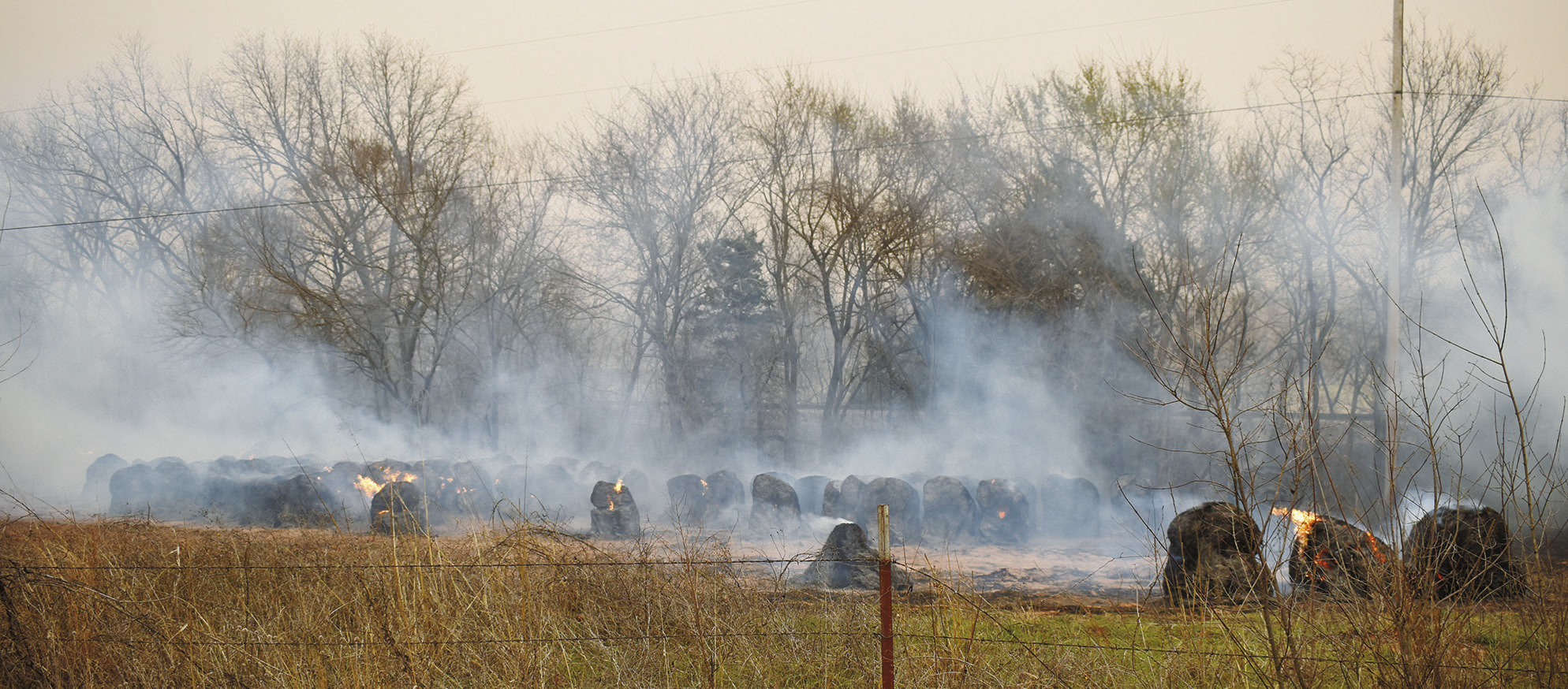
While Lincoln County is no stranger to wildfires, the area could be looking at a higher risk this year.
A monthly report from the National Interagency Fire Center in Idaho released on Jan. 2 reported that underlying dryness has been building in much of the Southern Area of the U.S., which includes Oklahoma, and worsening drought conditions are expected.
This adds extra risk of wildfires, especially when considering broad areas of above normal to exceptional fuel loading across the Plains, the report said.
Local fire chiefs are well aware of the upgraded risks. Chandler Fire Chief Bobby Buchanan said this year has the potential to be an extreme fire season all the way into April, unless the area gets more moisture.
“We had very heavy rains in the spring that led into…the summer and spring, I guess I could say, that led into heavy growth of different variations of crops and weeds and things like that,” he said.
He added that the growth becomes a fire danger in the fall and when freezes hit in winter, killing off the vegetation and turning it into fire fuel.
“And then you just add the high wind that we get… the variation of wind and higher winds at times creates an extreme fire condition,” Buchanan said.
Wellston Fire Chief Todd Beesley said he received a report in November predicting a high wildfire risk this year, but it hinges on getting more moisture.
“But again, in Oklahoma, we usually get some nice moisture, and then what immediately follows it is the wind that this time of year dries the surface out really quick,” he said.
Stroud Fire Chief Chris Wilson said the severity of the risk and the time of wildfire season comes down to ecosystem conditions and weather patterns.
“We haven’t had rain in quite a while now, and sometimes we’ve got some moisture in the wintertime, so it just all depends on what the weather wants to do,” he said, adding that his station treats every season as a potential wildfire season, with some periods being more dangerous than others.
It’s Oklahoma’s erratic wind conditions that often pose the biggest risk. Buchanan said it can make fighting wildfires difficult with the constant direction changes. The winds also tend to dry things out.
All three said their stations maintain constant readiness for wildfires, including regular checks of equipment, watching weather patterns and other related reports, and maintaining connections with other fire districts, should they need to call in for aid. They also often report on potential fire dangers to the public through their social media accounts.
Buchanan said the Chandler department recently purchased a new brush truck that should be ready in about a month, and received a grant for another that should be in service in another three to four months.
Beesley, who runs a volunteer fire district, said he keeps a headcount of available volunteers, though this becomes challenging during daytime work hours, when most volunteers are at their regular jobs.
However, there are steps that the public can take to limit the risks of wildfires on their properties, according to all three chiefs.
They emphasized staying aware of current conditions - noting when there’s been an extended period of drought and being aware of fire conditions. This comes in handy when doing controlled or prescribed burns on properties.
They said if planning a controlled or prescribed burn to always inform the local fire department and/or the county communication center beforehand.
Wilson added to always have a water source handy and be aware of changing weather conditions.
“What might be fine today, there may be a cold front or something comes through overnight. The wind shifts and picks up, and then their little fire that they had the day before is now a big fire,” he said.
He also wanted to remind residents that burning household trash in barrels is illegal -- if there are available commercial trash services in the area -- and a common source of wildfires.
The biggest recommendation from the chiefs was to keep dead brush and vegetation on properties cut down, especially from around houses. Homes surrounded by dead vegetation are extremely difficult to protect during a wildfire. This also includes keeping the grass mowed down and removing debris such as dead leaves or pine needles.
Wilson said it was also good to remove any cedars near homes.
“A cedar tree, once it goes up, there’s so many volatile oils and resin in those trees that they’re just almost impossible to extinguish during dry climates,” he said.
Beesley added that it’s extremely important for all emergency services -- not just fire -- that rural property owners clearly display address markers at the road so that they can be found.