

EMILY KALKA
Back in the spring, Caleb Stone wasn’t sure if he would have a pecan harvest this year. After going through a fall ice storm, then a polar vortex, followed by a late freeze and a drought, he was fairly sure there wouldn’t be much.
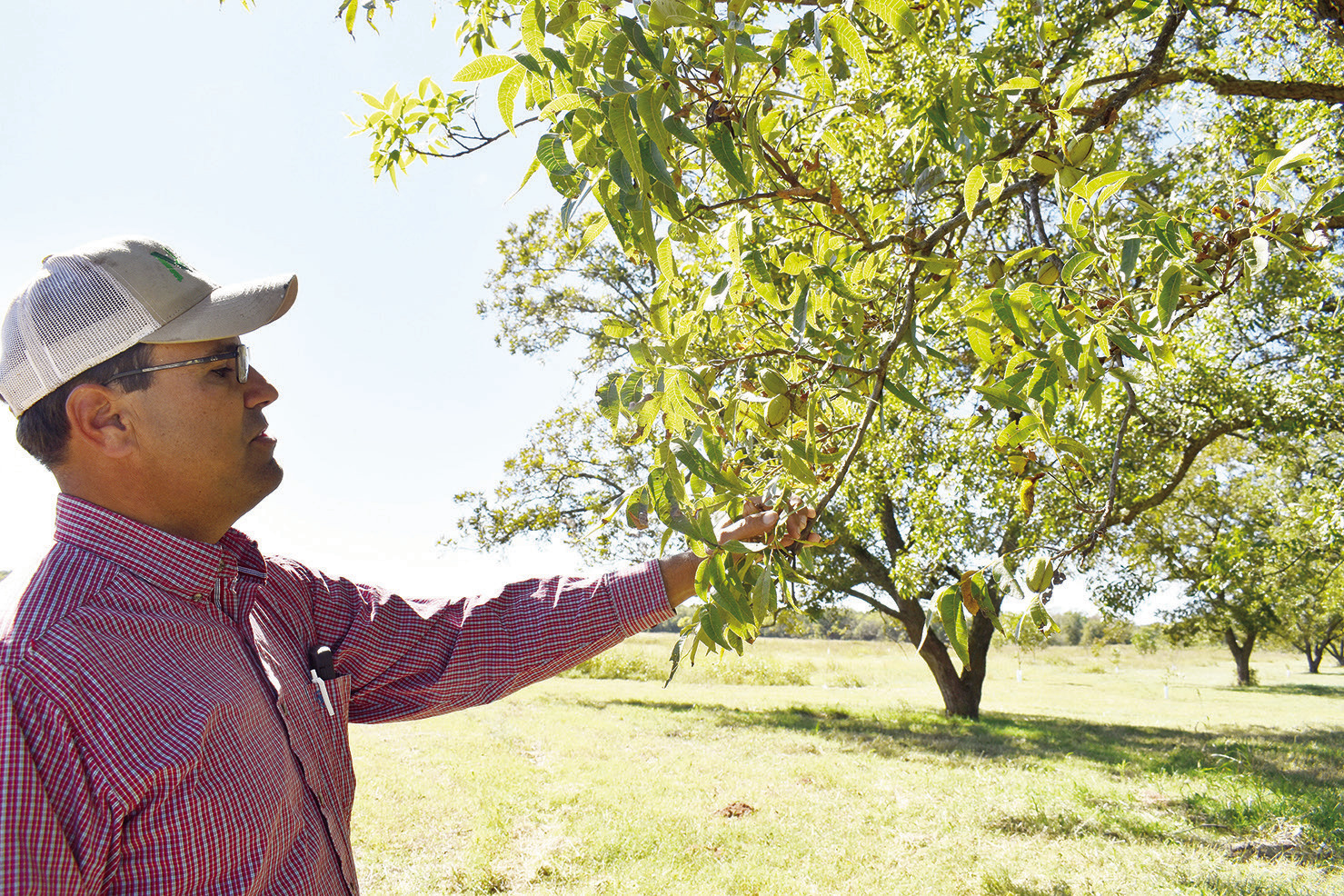
“This spring, I thought we didn’t have a crop at all. And then all summer, we kept looking, and there’s nuts,” he said, standing under the branches of one of the around 800 to 900 trees in his orchard.
Stone is one of many folks who are looking at a better harvest this year. According to Becky Carroll, an extension specialist in fruits and pecans at Oklahoma State University, this year is looking good overall for the state. On average, Oklahoma produces around 17 million pounds of pecans, but this year, the state is estimated to produce 22 million pounds.
“It goes up and down a lot because pecans are an alternate bearing crop, so they’ll have a large crop one year, especially on native trees, and then very little the next year or two,” she said.
Producers struggled the last few years, with some still recovering from freezes in 2021 and 2022, as well as drought. Pecans were late ripening in 2022 because of the drought, and then an early freeze in October made them unharvestable.
“It was a combination of the worst events possible,” Carroll said.
She said that most places around the state got good timely rain, which contributed to the larger harvest. Most orchards are located in the eastern part of the state because there’s more rainfall, creeks and river beds. However, back in the day, Lincoln County was a major producer, according to Stone. He said St. Cloud Hotel used to be a pecan processing facility that sold the nuts to 30 different states.
“The extension agent when my parents moved here in 1980, he told them that Lincoln County was the pecan capital of Oklahoma because more pecans were sold per capita than anywhere else in the state,” he said.
For Stone, this year is definitely looking better. He and his wife are already preparing to pull out the equipment to begin harvesting next week, though he didn’t estimate how many pecans he believes they’ll get.
“There’s been years we’ve harvested nothing. If we get a late freeze in April, we don’t even pull the equipment out,” he said, though they do maintenance around the trees.
Stone’s orchard is 150 acres, though only about 50 is in pecan production. He hopes to get it up to 80 to 100 acres.
“Every year, we kind of see what produces, and we cut more down,” he said. There are about 10 acres of new trees steadily growing next to a span of older, taller trees that are currently laden with pecans.
When Stone was in high school, he used to go around and collect pecans from other people’s yards in Chandler for extra spending money. He then helped his parents with a small native grove in Shawnee before getting his own plot in 2014. He said he wanted his three sons to have an opportunity to get involved in agriculture and get outside.
Stone easily spoke about the different things he and his wife do to help fertilize the orchard before moving on to the history of the area, including the span of trees that were planted from award-winning pecan trees in the past when the area was a research station.
It’s clear he knows his stuff, though Stone remains humble about his own operation.
“I mean, it’s not big,” he said with a chuckle before describing a large, 2,000acre orchard he once toured. “Awesome stuff. This is nothing compared to them, but it’s enough to mess with.”