
Language is more than just words grouped together. It is deeply intertwined with culture and identity. This is even more so true for Native American tribes.
“Our language is what defines us as who we are as people... It signifies our identity. A lot of our words hold what we see value in when we interact with the world,” said Katie Thompson, director of the Sauk Language Department with the Sac and Fox Nation.
“It’s one of the most important things to keep our language because that was the very first thing that was targeted when they were trying to assimilate us.”
Many Native American and Indigenous languages are considered dead or dying today. Thompson said there are no more fluent speakers of Sauk, but there are between 10 to 50 people who are considered conversational or involved in revitalizing the language.
Justin Neely, the language director at Citizen Potawatomi Nation, said they are down to five or less first-language speakers of Potawatomi and about 15 second-language speakers who are conversationally fluent.
“You could look at that in a very depressing way and say, ‘Oh, we’re at the end of the road.’ Or you could look at it from a half-full type of perspective and say, ‘Hey, all we have is up,” he said.
Both Sac and Fox Nation and Citizen Potawatomi Nation have very active departments that are working to preserve and spread their languages. Both utilize technology to help reach more of their tribal members, wherever they are and whatever generation they are.
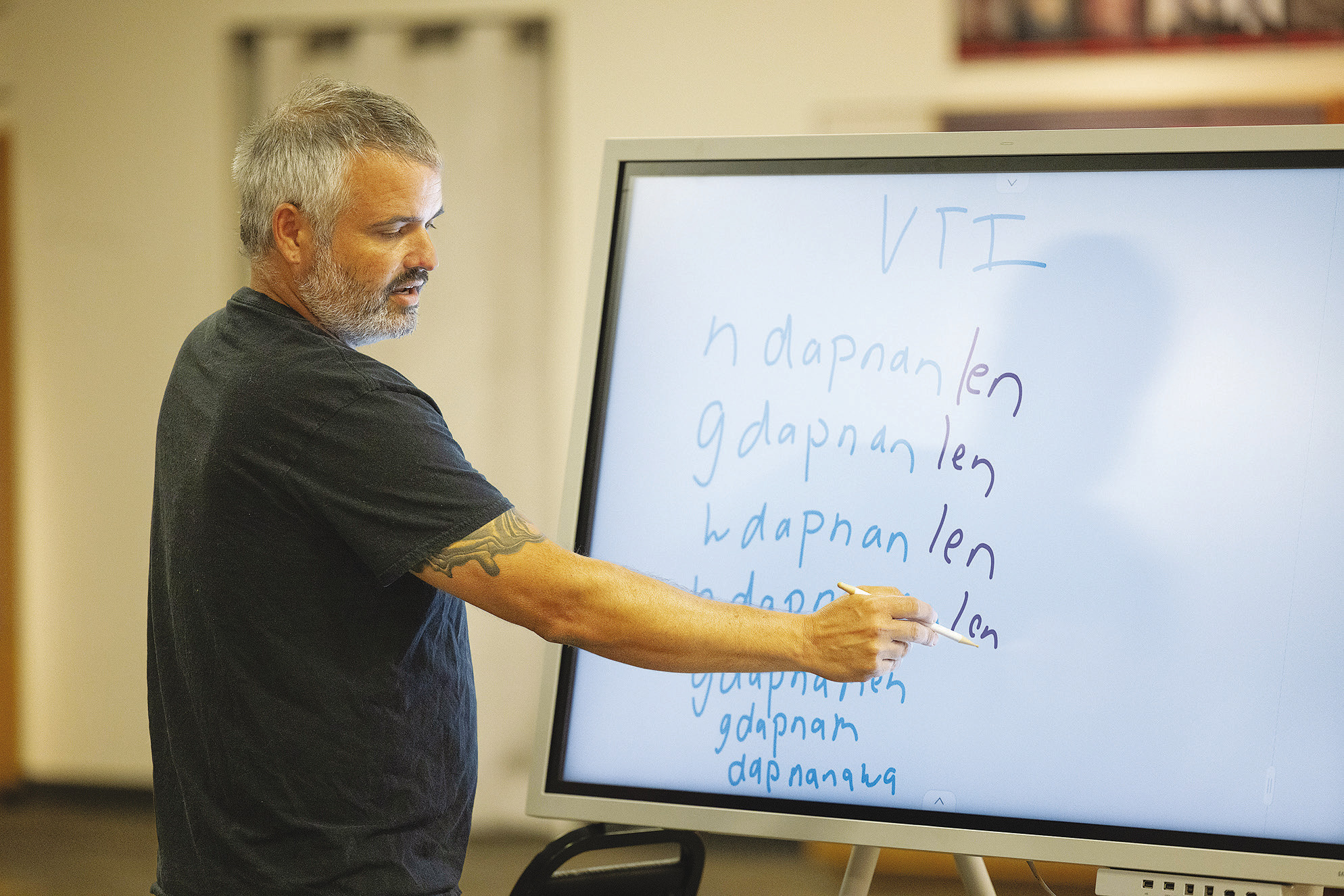
“What we want to do is work on getting language out to as many people as possible in ways that are useful to them, whether it’s through apps or videos or community classes. We’re just trying to get a broader reach of our language at this point,” Thompson said.
Neely calls himself a big believer in using tech to multiply abilities and talents. Citizen Potawatomi Nation has local classes that they also broadcast through Zoom so that tribal members anywhere can attend. He added that these courses aren’t limited to only tribal members - they’re open to anyone interested in learning. They also have YouTube channels with videos geared toward children and adults, storytelling events, apps and online classes for world language credit through the Oklahoma Department of Education.
Seminole State College is also working to preserve Native American languages. Associate Professor Yasminda Choate said every few semesters, they offer courses in Muskogee-Creek and Absentee Shawnee through their community- based business and industry classes. She added that they hope to someday offer credit-bearing courses. The college has a grant-funded program, Native Americans Serving Non-Tribal Institutions, which they use for things like bringing in the Cherokee National Youth Choir and hosting the Native Language Conference.
The school, of which the student population is about 30% Native American, also has a Native Language and Culture Resource center with language software, tribal language books and resources on the history of languages.
“Those are some of the ways that we are trying to do our part to promote the preservation of Indigenous language groups because as the native speakers die out, a lot of times, there’s no one left with fluency, so it can be really difficult for those languages to bounce back,” Choate said.
Other tribes in the area, like the Iowa Tribe of Oklahoma, take a more personal approach.
“Families keep their language. So we have language speakers, but… it’s not our culture to give,” said Regina Riley, higher education director at the tribe.
The Iowa Tribe of Oklahoma Higher Education department keeps its tribal library stocked with plenty of resources for members and library cardholders, which includes language books.
“We have original hymns, different resource books, and they have language in them - Ioway, Oto, Missouri language because Ioways are really close to the Oto language,” said Riley.
“We have young people that come in looking for that reconnection to their tribe. We have older tribal members that come in looking through our resources. We just tried to give them an academic space to express their own culture.”
Anyone who lives in Lincoln or Pottawatomie County - not just Iowa members - can sign up for a free library card and access more than just the physical library and resources. Riley said they also have a large catalog online, Kanopy, Over-Drive, Tumble Books, and more.