
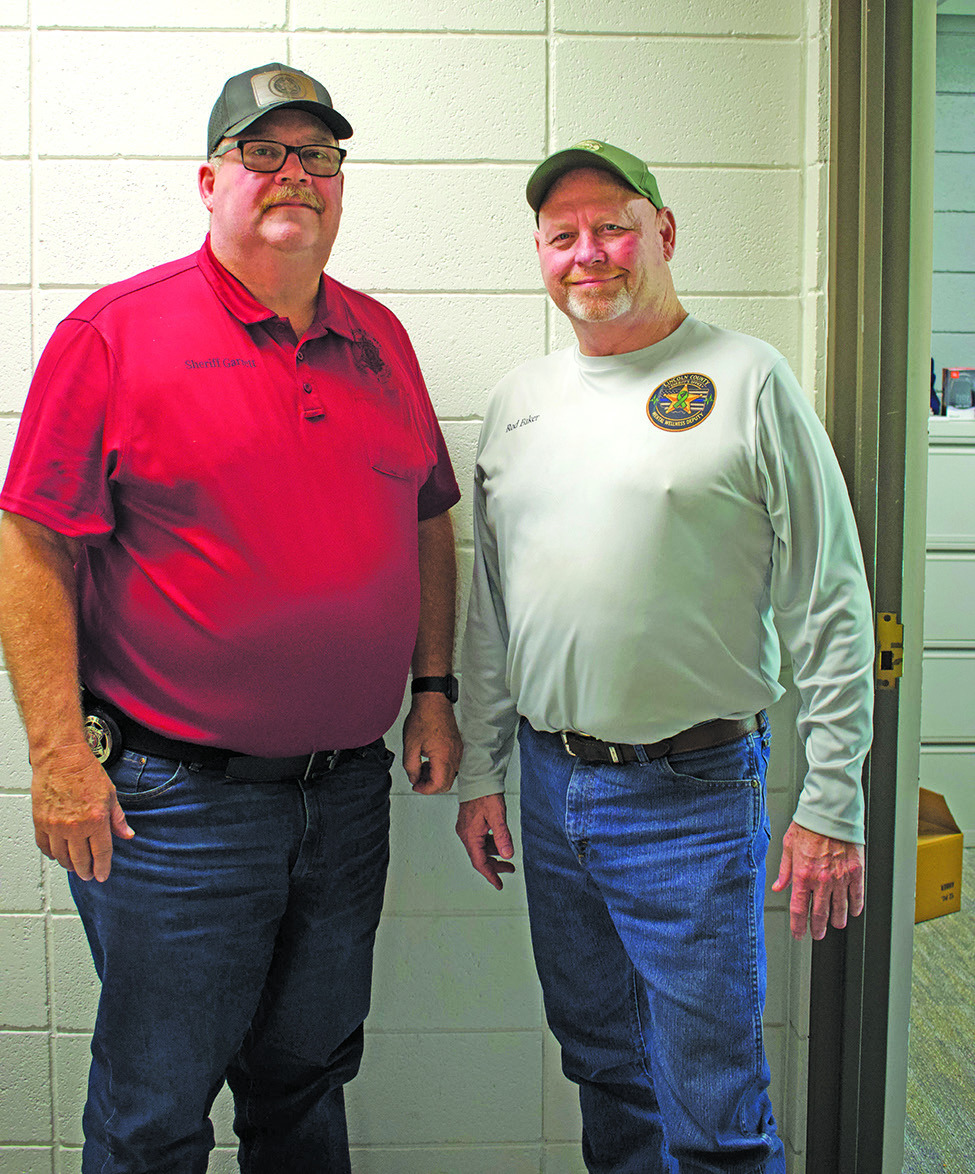
It was a traumatic car accident that changed everything for Rod Baker, but not in the way one might think.
On July 21, 2023, he hit a steer at night on Highway 99 and went off a bridge and into a tree, which crushed his neck. He should have been paralyzed, he said, but made a miraculous recovery. However, while Baker -- who is 29 years sober -- was recovering, he noticed all the doctors attempting to over-medicate him for pain relief.
“I was not allowing them to give me any pain medicine. The only thing that I allowed them to do was the anesthesia when they did the operation,” he said. “Nothing more than ibuprofen after that. But they continued to try to give me fentanyl and other pain medications.”
It was during this time that Baker developed a revolutionary trauma program that is now being piloted with the Lincoln County Sheriff’s Office.
Baker is the county’s first-ever wellness deputy and, along with Sheriff Kevin Garrett and Undersheriff Brad Jackson, authored the program that takes a trauma-informed approach to helping those who go through the justice system tackle their “addictions and afflictions,” as Baker calls them.
The program sets up coordination between the sheriff’s office and Rod Baker Recovery -- Baker’s nonprofit -- to identify, assess and begin treatment for those experiencing addiction and/or mental health issues.
There are 12 steps to building out the program, with Baker saying they are currently on Step Four. First, the program established recovery services within the Lincoln County Sheriff’s Office and Jail. Then, it turned to building community support through ministry groups, churches, businesses, municipalities and local recovery groups. The third step was to establish consistent recovery meetings within each city in Lincoln County, with one per night each night of the week.
Step Four, which Baker is currently working on, sets up a process for him to follow up on the recovery status of those incarcerated, paroled, on probation and released back into the community with support from the Department of Corrections.
The process starts by helping participants recognize their trauma. Baker said that all of addiction and most mental health issues are based on trauma.
“So the process that we have here is we start with information about trauma, where they recognize trauma responses. And then they fill out a little bit of information that helps them identify that it’s trauma that is the seed,” he said.
He then helps them to understand what self-care is and how to take care of themselves, before helping participants build a recovery plan and wellness plan. These include setting goals and how they can nurture themselves emotionally, mentally, physically and financially. The last part of the support plan is that Baker gives participants goals and objectives.
The next step of building out the program is for this support plan to follow participants wherever they go, whether it’s into DOC custody or out on release.
“Imagine being able to pull up someone that’s in the middle of a crisis or is having some sort of meltdown, and the deputies are able to arrive on scene, and though there may not be any complaints or arrest information, there will be information on their support,” Baker said.
Hopefully, this will involve calling Baker to the scene to help with those he’s worked with and their families, he said.The whole point is to try and break the cycle of arrest and jail.
“We incarcerate people to at least give them a moment to realize the intention of their wrongs. The whole judicial process is set up so that we make take a minute out of society and realize, ‘Okay. This isn’t working the way that it’s going,’” he said. “So, instead of us continuing to send them through the cycle, let’s break the cycle and start looking at recovery for them.”
Already, the program appears to be having positive effects. Baker said that since he started it in February 2026, the jail population is down and they’re seeing fewer repeat offenders.
He’s currently working with the DOC to continue tracking participants and maintaining that relationship.
“At some point in time, they are going to come back into our community. If they can come back to our community knowing there is support here, it brings a whole different attitude,” he said.
And it’s a program that everyone should be invested in, Baker believes, because it affects everyone, even those who aren’t dealing with addiction or mental illness directly.
“You don’t know who’s going to be drinking and driving one night when your high school child is coming home from work. Or the mother and her children on their way back from the grocery store and you’ve got somebody high on whatever their addiction is,” he said. “So, it’s going to affect the community no matter what… That’s why it’s so important to have the community support and the community recognition.”