
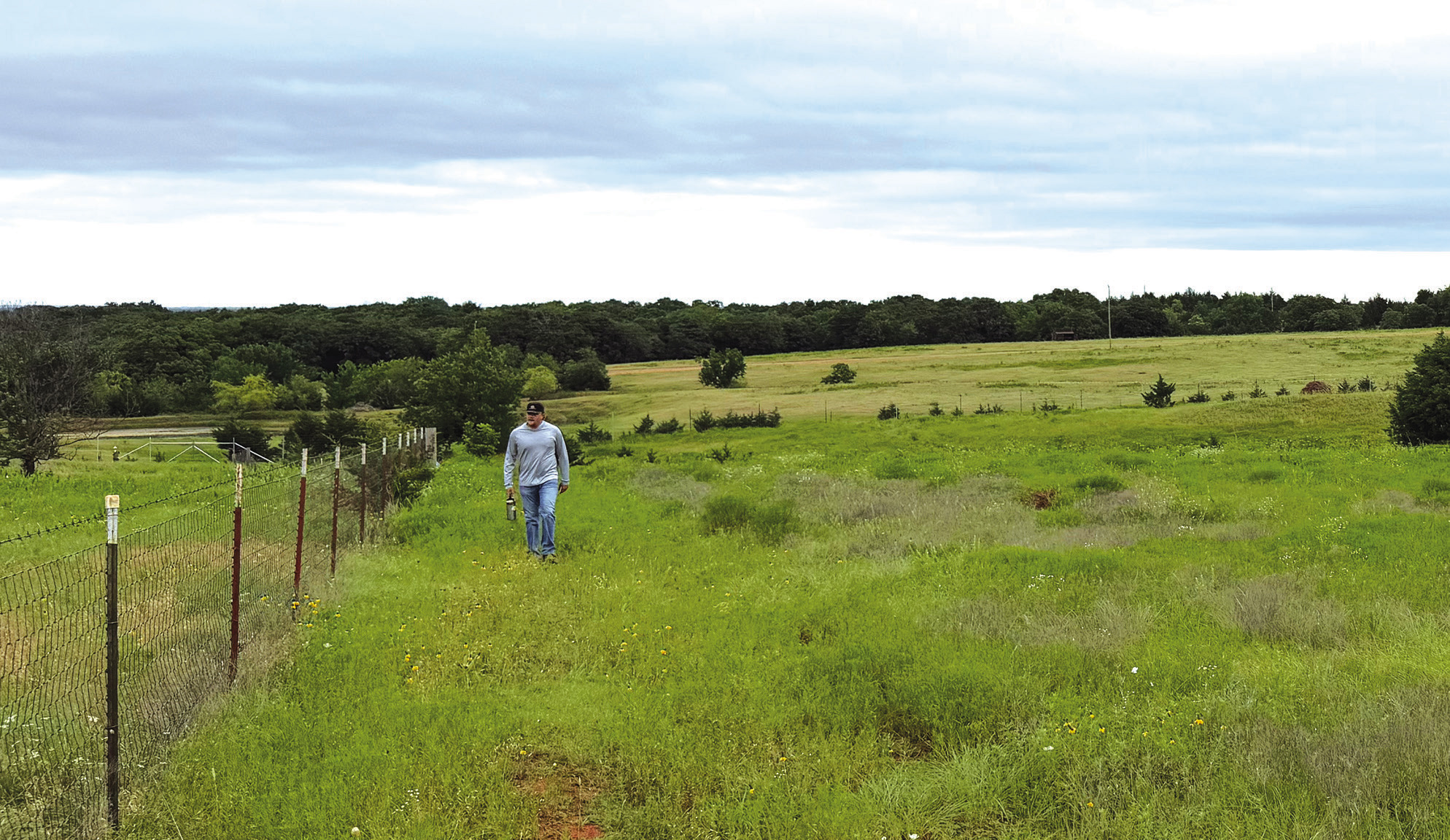
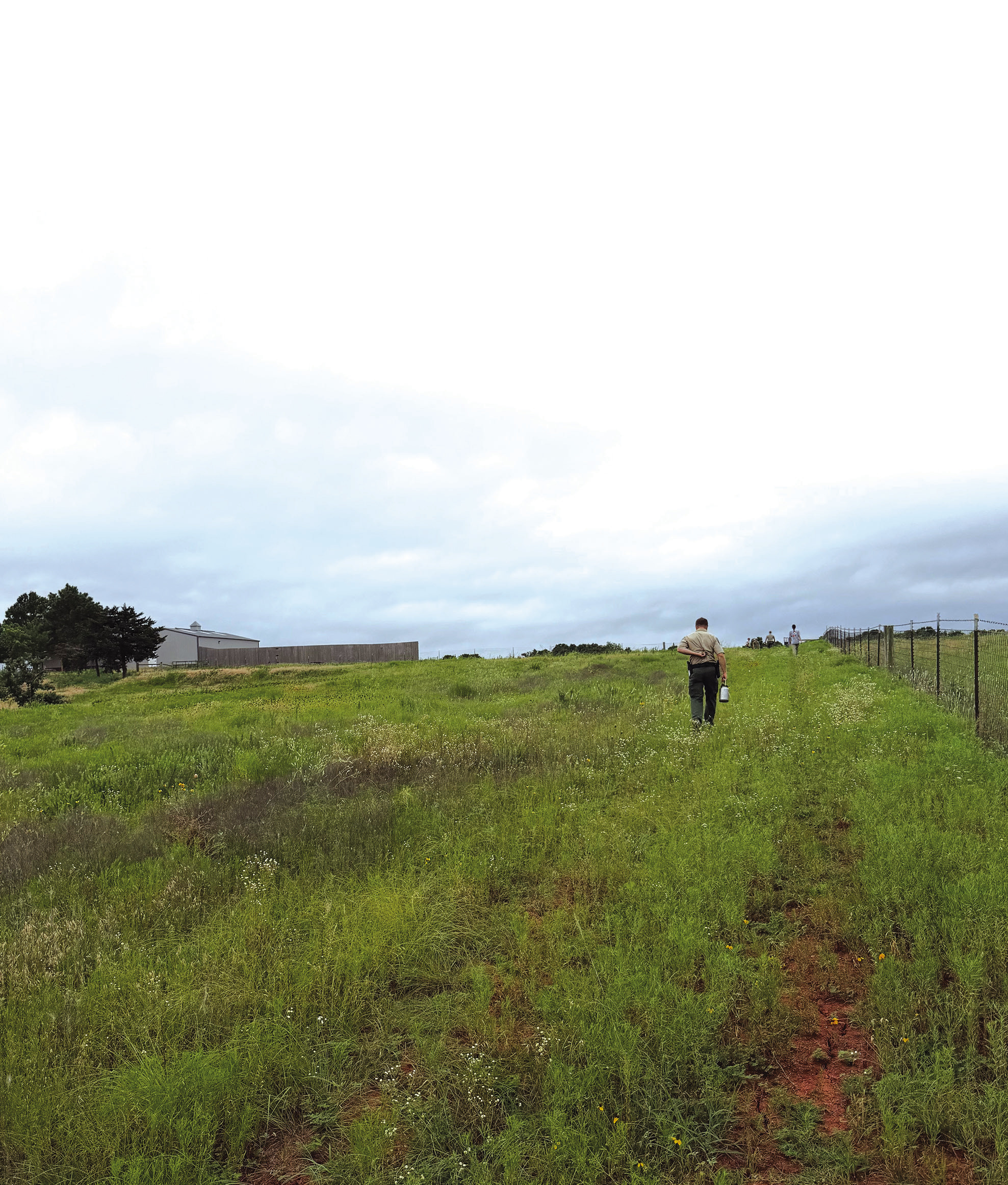
On a warm morning in rural Lincoln County, game warden Jacob Harriett walked a high-fence property with a small group, moving through grass, brush and overgrown foliage in search of deer.
“The goal is to push any native animals out, so they don’t become trapped in the high fence,” Harriett said.
Harriett led a group that included game wardens from Payne and Pottawatomie counties, an intern fromArcadia and a ride-along from Oklahoma State University. The group spread out across the property, working toward the fence lines and trying to cover enough ground to move any deer still inside. As the group walked, Harriett told everyone to watch for fawns hidden in the tall grass.
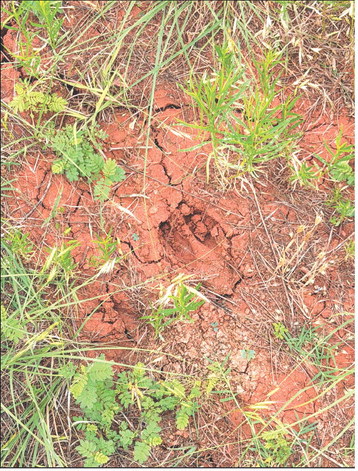
“Their defense strategy is to hold still,” he said. Harriett also noticed cracks in the dirt from the lack of moisture. As the group continued across the property, he identified native plants along the way. Native management is one of Harriett’s favorite areas of the job, and much of the walk became a lesson in what makes land useful to wildlife.
“These are plains coreopsis, and those are super important,” Harriett said.
A few steps later, he stopped at another plant.
“That’s milkweed,” he said. “That’s the one that’s super important for monarch butterflies.”
Under some of the trees, Harriett stopped at a patch of bare ground where little was growing. He said the area was historically prairie, but farming, erosion and a lack of fire changed the ecosystem over time. Without prescribed or natural fire, he said, blackjack and cedar trees can take over areas that once provided better habitat.
“There’s no food here at all,” Harriett said. “The only thing living under this leaf litter is ticks.”
Harriett said it was only the second deer drive he had been part of in seven years, but the variety of the work is part of what he likes most about being a game warden. He said he is almost always doing something different, and most of the time, he is outdoors.
Summer is typically slower, mainly involving fishing compliance, classes and training future game wardens and biologists. Hunting season, which runs from fall into winter, is when the job gets busier.
He said game wardens are full law enforcement officers but have a different focus.
“We do anything any other law enforcement does,” Harriett said. “We just specialize in wildlife enforcement.”
Harriett said most contacts are routine, but he recalled cases involving people shooting from roads and another in which a group illegally killed deer while driving around a field and jumping out of a minivan. In those situations, he said, the work shifts from education and routine tickets to gathering evidence, conducting interviews and proving what happened.
Nothing that dramatic happened on the high-fence property. By the end of the walk, the group had spotted one deer and moved it out before the fence was closed.
For Harriett, that was still mission accomplished. Not every day brings a major violation or a chase through the woods. Some days are spent walking fence lines, checking the health of the habitat and looking out for native deer.