
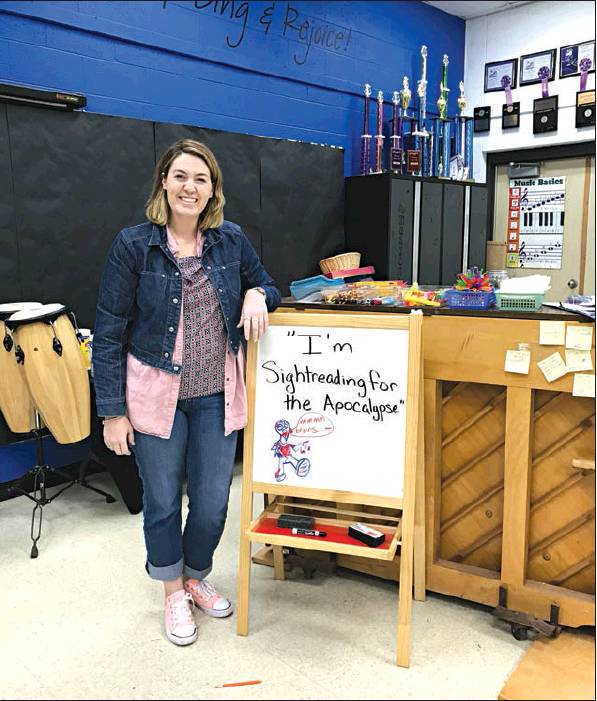
Some students get out of bed and go to school for their friends, or science, while some roll over their covers, plan their feet on the ground, and get ready because of choir.
Laura Watson, Chandler junior and high school choir director, was one of those kids. Now, as a teacher, she wants to provide that same motivation for her students.
The problem is choir attire is expensive.
“I never want money to be an issue for a kid to join,”
Chandler choir director Laura Watson said.
Choir dresses cost $64 and tuxedos over $100 but Watson received a $500 grant from Central Oklahoma Federal Credit Union.
She has 14 new high school students and half of her 36 junior high class are new 7th graders, she said. The grant only covers choir attire for eight of her students.
“That’s not as many new kids as we have, but those are eight kids that don’t have to worry about paying for it,” Watson said.
Usually the school helps cover the cost for students but most of that money is now going to an alumnus concert this coming spring, Watson said. She has commissioned Darla Escherman to write a piece just for the Chandler choir.
The grant has been one of the solutions Watson pursued to help her students stay in choir. The school had a fundraiser making and selling pumpkins rolls and some of the money made went to the choir. Then six or seven different members of the community told her they would help cover the cost of choir attire, Watson said.
Now her students can focus on learning.
This is the third year Central Oklahoma Federal Credit Union in Davenport has given out a total of $4,500 to teachers to be used in their classrooms.
“I’m excited that in a small way we get to give back to the community,” COFCU president and CEO Tommy Smith said. “Our teachers are our heroes, they teach our children and grandchildren.”
COFCU grant coordinator Patty Swan organizes which teachers from each nine Lincoln County districts receives a grant. She sends out an email to principals and superintendents during the first week of April, she said. Teachers have until mid-July to write a letter stating how they can use an extra $500 and those letters go through a group of judges, Swan said. The judges read each letter and decide who will be awarded the $500.
Before the school year starts, Swan then takes each check to the classroom of the teacher and surprises them with a presentation and the grant.