
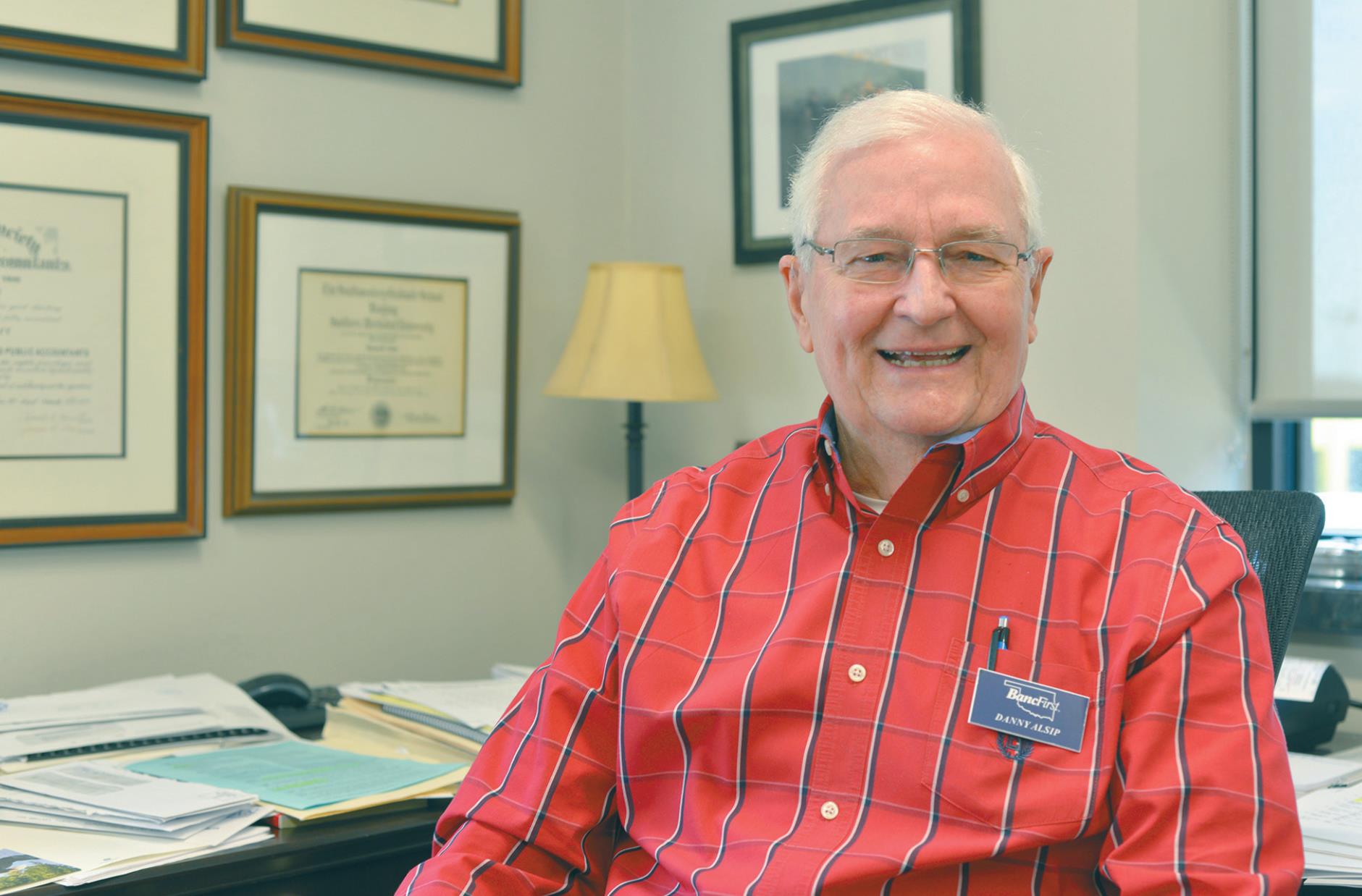
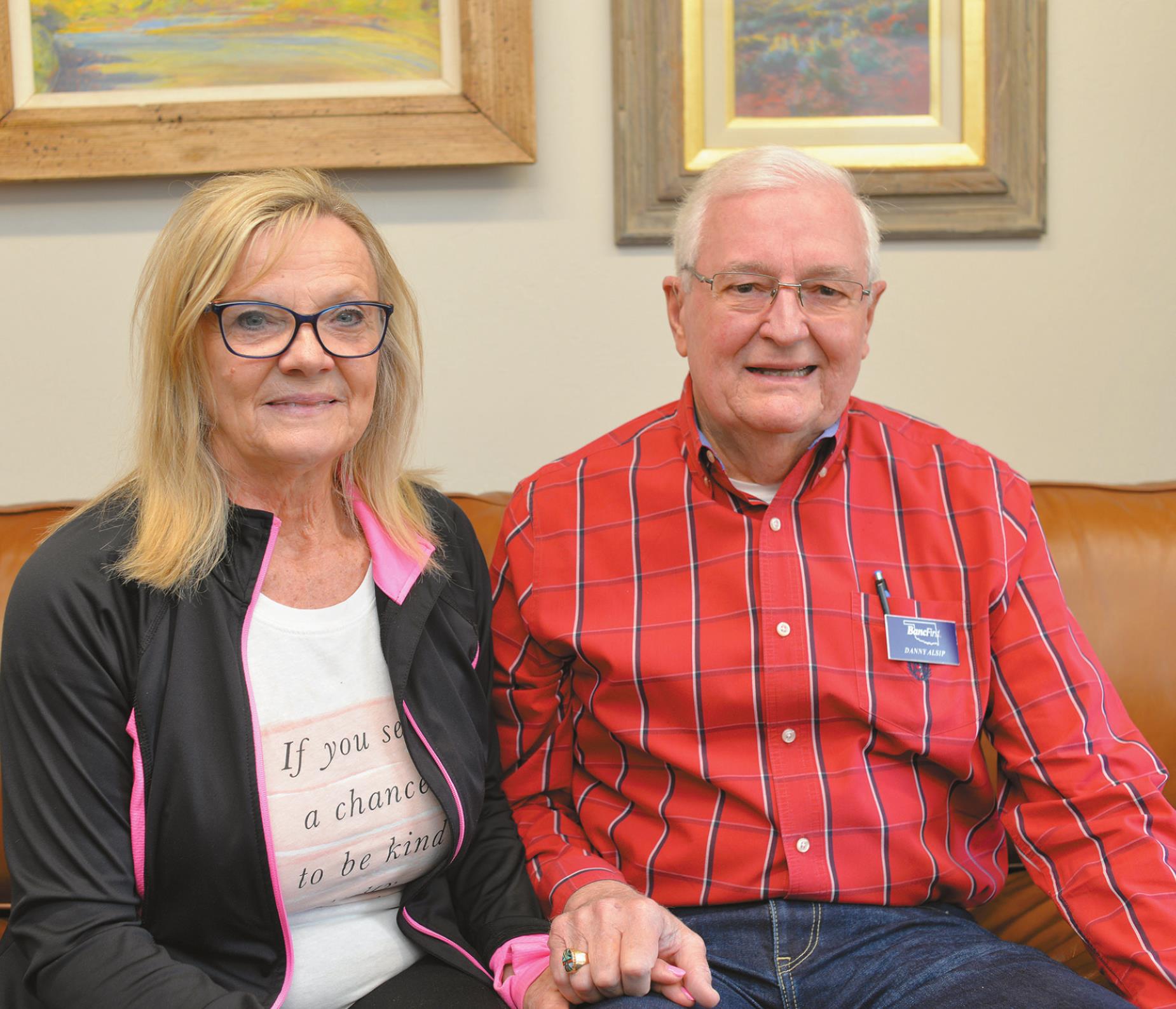
The first sign something was going wrong was when Danny Alsip couldn’t taste his sandwich.
He and his wife, Rinda, were visiting their granddaughter in Arizona for Thanksgiving last year and stopped for sandwiches at a Jersey Mike’s.
But instead of the usual tasty fare, Danny’s sandwich was what he described as “just bland.”
“No mayonnaise taste or anything.”
That was the beginning. Before long, Danny started feeling bad, with troubled lungs, and began suspecting he might have COVID-19.
“Originally, I thought I had a cold, but I kept getting sicker and thought ‘this is not good,’” he said.
He and Rinda decided they should be tested for COVID, but they didn’t want to go to an emergency room in Arizona or New Mexico. So they packed and started driving the 900 miles back home.
Or so they thought.
Before Danny would see home again, he’d be diagnosed with COVID-19 and double pneumonia, spend 17 days in the hospital and seven days in intensive care and a doctor would tell Rinda “it could be any minute. He’s in bad shape.”
Both Danny and Rinda tested positive and became two of the more than 30 million Americans who have tested positive for COVID-19 since the virus made itself known here a little more than a year ago. In Oklahoma, 439,000 have tested positive and almost 5,000 have died.
The drive back to Oklahoma was a rough one. With Danny struggling to breathe, they made it as far as Elk City before deciding to call it a day.
“Every time he would breathe, it was not him moaning – it was his body moaning,” said Rinda. “It was just a deep moaning that I can’t describe. I would have to say
‘Danny, sit back and try to relax.’
“He was struggling for every breath and his body was in trouble.”
(He was also texting friends on the sly, trying to see if there was a radio broadcast of the Chandler-Marlow football playoff game, which Rinda may not have known about until the interview for this article.)
The next morning - Saturday - they drove to Stillwater, where they got the positive test results and Danny’s lungs were x-rayed.
Then it was to SSM St. Anthony Shawnee Hospital, where there was an available bed in ICU.
There, the doctor gave him the news that he would be fighting for his life, in the most absolute literal sense.
Several people died while Danny was in ICU, including five in one night, but he said he never really thought that he would.
“It was unnerving,” he said. “But I thought, you know, there are a lot of people praying for me and these are good doctors and nurses.
“With God’s blessings and help. I can do this.”
Rinda spent the first couple of days in her car in the hospital parking lot and getting phone calls about Danny’s condition.
Come Monday, she was allowed to be in his room in the afternoons.
Danny says he was aware of everything that was going on, but was unable to sleep.
Doctors told Rinda that he should be on a ventilator, but “they thought we’d lose him
Danny fought for a week and was able to leave ICU.
He continued to improve and finally hit the magic day when he was discharged and got to go home.
Danny and Rinda could not say enough good things about the doctors and staff at St. Anthony and the care he received.
But he was a different man from the one who couldn’t taste his sandwich that day in Arizona.
For one thing, he lost 24 pounds while he was ill.
He was weak, his lungs were shot, he had to walk with a cane and he had a different outlook on his life and the world around him.
“It changes your perspective,” he said.
“And what you think is important.
“I look around and see my grandkids and I think ‘I need to be here.’”