
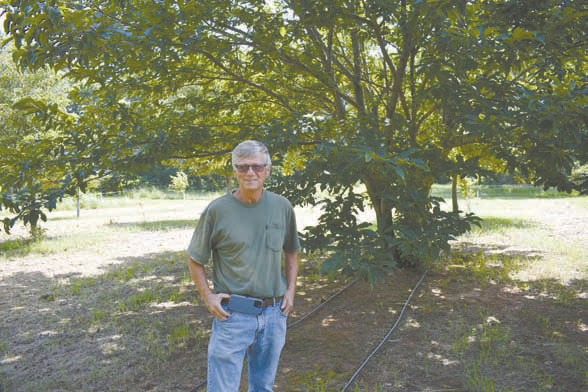
When Steve and Jean Lucas moved to Chandler in 1991, orchards and chestnuts weren’t really on their minds. Instead, they worked their regular day jobs -- Steve as an accountant and Jean as a teacher -- raised their children, and did what everyone else did—cattle and hay. But something changed in the early to mid-2000s. “We decided to pivot a bit and figure out what can we do with this ground,” Steve said, maneuvering through straight lines of trees, all of them evenly spaced. Cattle were a bit too aggressive for them, so they wanted to find something a bit easier. Ironically, Steve said he and Jean are working harder now than they did when they had the cattle. He said they started with apples, beets, plums, nectarines, almonds and other trees to see what would work. Steve added that they wanted something that would be more consistent year after year. It was about that time that he saw something on the University of Missouri’s website about chestnuts. “I thought, well, let’s go up and check it out. And so we did. We got a thousand trees in 2009,” he said.
“We went in all in, then within about 18 months, we were down to, I think, 38. So, that was a painful all in.”
However, Steve is not one to give up so easily.
From there, he launched into intense research on the best ways to grow chestnuts. He’s traveled to Taiwan, China and Italy to study cultivation techniques.
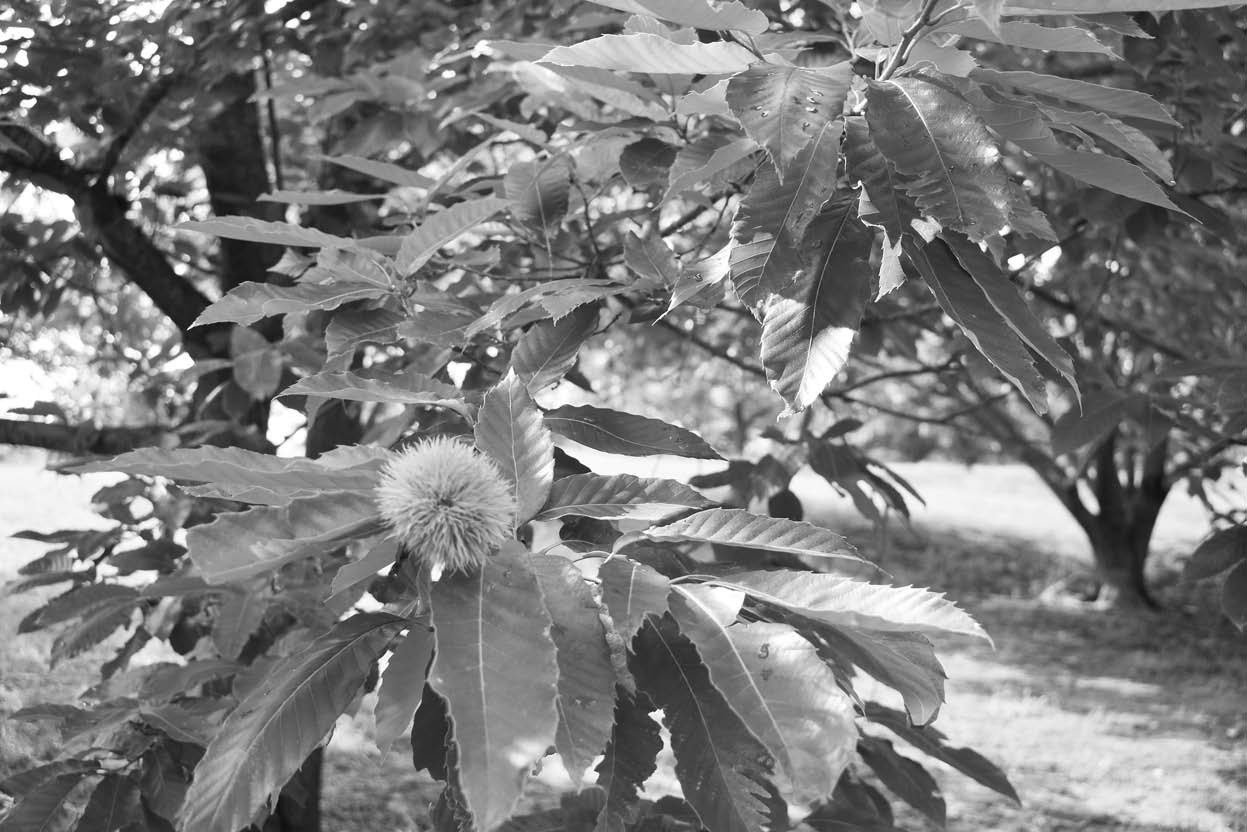
All of this led to An Oklahoma Chestnut, Fruit & Nut. Currently, they have around 2,400 trees, including Chinese native chestnuts and fruit, though Steve was a bit coy about how much they produce a year. He said it’s in the five-digit range in pounds.
They harvested their first crop in 2015, yielding just under 30 pounds. Enough to fit in one bag. Steve said he and Jean went up to an Asian market in Oklahoma City, hoping to get some advice on where they could sell their cop.
He walked out with not only his first customer, but the orchard’s only retail customer.
Growing chestnuts and caring for the trees is a constant job. There’s making sure the soil is good, as well as mowing and running irrigation lines. Checking the trees for any potential damage from wildlife or sometimes livestock. And then there’s always the chance that Mother Nature will step in.
All the recent rain this year is a double-edged sword.
“On the plus side, you know, it’s very good for the trees up to a point,” Steve said. “Because of our tight clay soil and it’s kind of hard. You can see a little bit, it slopes up, then it slopes down, and so forth. So, the good news is, the water does tend to run off pretty well.”
He’s expecting a good crop this year, commenting that the trees had probably about 40 pounds of chestnuts.
The other side of the business is the nursery. This initiative began approximately 10 years ago as a means to make sure the best trees were planted in the orchard. Steve said they were growing so many that they’d leave them in the nursery a couple of years to see how they were shaping up in Oklahoma conditions. Then they would put them in test plots away from the main orchard for a few years.
“If they were going well, then we’d either start incorporating them into our main orchard, or… we still have orchards in other states,” he said.
They started selling them about seven or eight years ago, when a businessman who was interested in getting into chestnuts stopped by to see their operation. That year, there were about 5,000 to 6,000 trees in the nursery, and the man wanted 400. Steve politely declined until his wife pointed out that it would be 400 fewer trees that they had to plant, and cash flow.
“Within two days, we delivered 400 trees to Eastern Oklahoma, and that’s how we started selling them,” he said with a chuckle.
Numbers go up and down each year. Steve said they had less than 3,000 trees in the nursery this year because they’re focusing more on the orchard production, but they’ve had as many as 6,000 to 7,000.
All in all, despite the long days during harvest season and all the work and study that go into the orchard, Steve seems happy to do it all. However, he does have one word of advice regarding how to cook chestnuts.
“So, the second year of harvest, and again, my knowledge was not what it was today. So, we thought, well, we’ll just go ahead and roast them on an open fire like the song,” he said. “So we did. And it was like charcoal.”