
Staff Writer
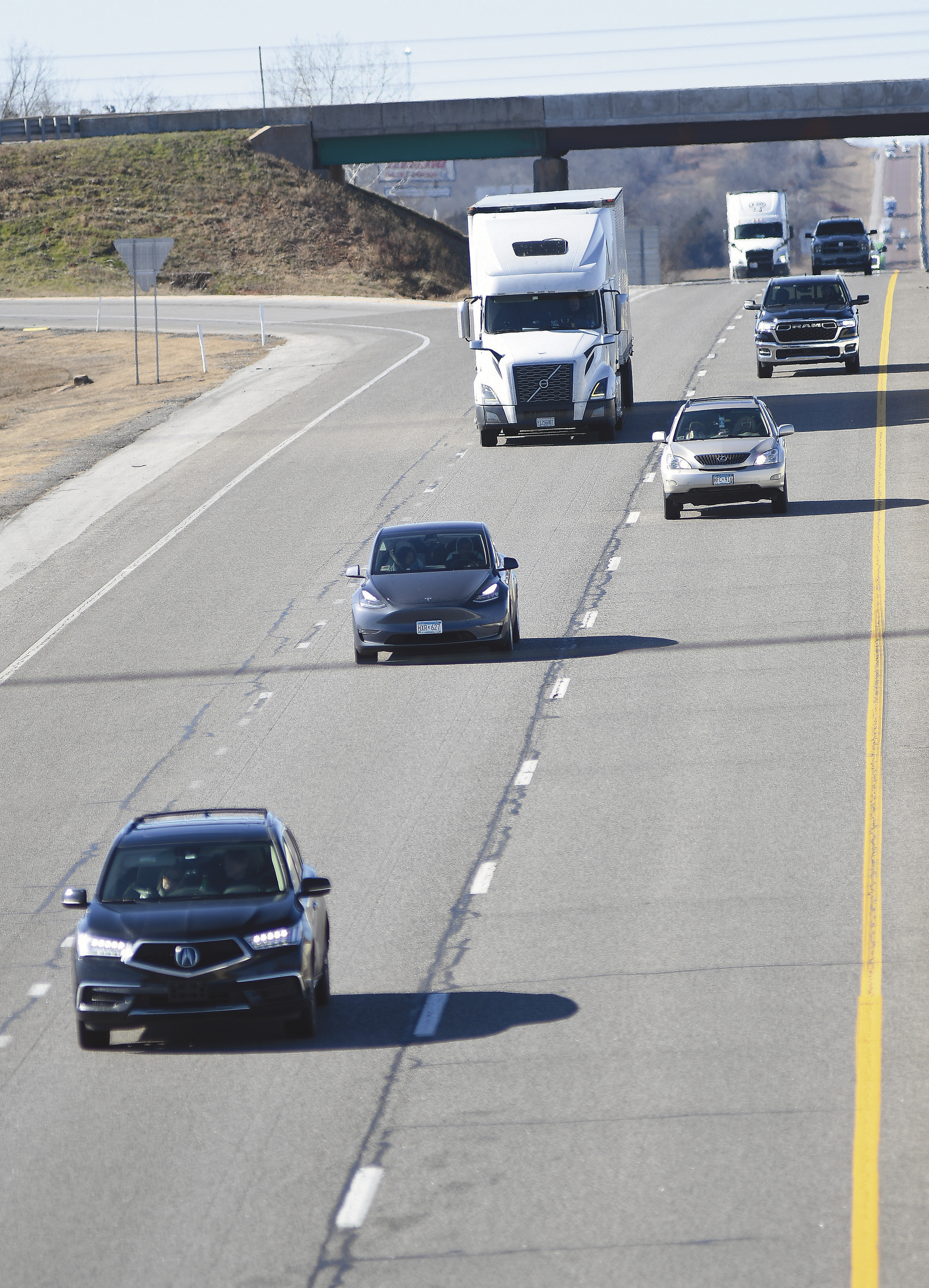
EMILY KALKA Starting on Jan. 1, a systemwide toll increase went into effect on turnpikes in the state, according to a press release from the Oklahoma Turnpike Authority (OTA) released on Dec. 31.
The release said for the average turnpike/PIKEPASS user, the toll has increased by about one cent per mile, with drivers now paying a total of about seven cents per mile.
The increase varies by turnpike. For the Turner Turnpike, Will Rogers Turnpike, John Kilpatrick Turnpike and Kickapoo Turnpike, it is a 20-percent increase. For the H.E. Bailey, Creek, Indian and Muskogee Turnpikes, it’s a 15-percent toll increase. For the Cimarron, Cherokee and Chickasaw Turnpikes, it’s a 10-percent increase. The Gilcrease Expressway in Tulsa won’t see a toll increase until early 2026 because it is on a separate trust indenture.
For reference, before the increase, it cost around $1.98 with PikePass and $4.20 for PlatePay to go from Chandler to I-35/ Kickapoo, about $2.64 and $5.82 from Stroud and roughly $1.50 and $3.72 from Wellston. Going to Tulsa was around $3.60 and $10.50 from Chandler, $2.40 and $10.50 from Stroud and $4.02 and $10.50 from Wellston.
OTA said in the press release that it is dedicated to keeping costs reasonable and that tolling costs had not kept up with inflation. In 2024, the rate on the Turner Turnpike was $4.50 from Oklahoma City to Tulsa, up slightly from the $1.50 drivers paid when it opened in 1953. The plan is that the increase will generate more revenue to support current and future construction through ACCESS Oklahoma.
“Oklahoma turnpike tolls will remain among the lowest rates in the nation, compared with the national tolling average of 22 cents per mile,” said Joe Echelle, OTA executive director. “It’s important that we remain competitive and affordable while balancing the increasing costs of construction, maintenance and operations. OTA is committed to providing safe, high-speed highway infrastructure and key corridor connections to the tax-supported state highway system.”
According to OTA, the turnpike system doesn’t receive state tax appropriations with toll revenues serving as the only funding source for operations, maintenance and debt payment.
Another change that started on Jan. 1 was the reclassification of vehicles, according to the press release. Instead of the former five toll categories, there are now three - small, medium and large. The classifications are still based on the number of axles.
Also, starting in January 2027, there will be a 6 percent toll rate inflationary increase planned for every other year. They will be reviewed annually in consultation with OTA’s traffic engineers as required by the Authority’s Trust Agreement. The Board will consider adopting the rate adjustment before each effective date.
ACCESS Oklahoma is a large-scale plan to improve the current turnpike system. It should help solve growing congestion, travel time reliability and safety issues. The project plans to widen several turnpike corridors to six lanes, improve pavement and bridge conditions, create new access points along the corridors, improve emergency response times, complete the Oklahoma City Outer Look and build a new route that will relieve traffic in the I-35 southern corridor.
The 15-year plan is estimated to cost $8.2 billion, according to the press release.