
With wildfire risks climbing, the land management division of the Oklahoma Conservation Commission is working to make a dent in the infestation of cedars across the state.
Trampas Tripp, director of the division, said for the last three years, they’ve been going around the state and providing cedar removal in areas that are prone to wildfires. Currently, they have about 16 technicians that cover about three counties each. Technician Sam Moss works in Lincoln County as well as Creek and Pawnee.
Specifically, land management is working to clear out spots where the threat of wildfire could encroach into populated areas.
“So we’re not just removing cedar trees on properties, we’re doing it in certain areas where we can kill the wildfire threat going into populated areas, infrastructure,” he said. “I wish we could just have staff to go out and remove cedars everywhere. Not enough money, not enough resources.”
It’s one of the services offered by the Conservation Commission to protect life and property, Tripp said, especially as the wildfire threat this year could be as bad, if not worse than last year.
He said that with the rainfall the state received in early spring during the growing season, and the way Oklahoma has pattern shifts on cold fronts, this February through April could be a very active wildfire season, as there’s a lot of fuel out there.
The way the program works is that land management talks with county commissioners, city managers, fire departments, emergency management and other public/city offi cials, to determine areas that are at risk of pushing wildfires into towns, cities and other populated areas. They also utilize satellite images and aerial photography to find highpriority areas.
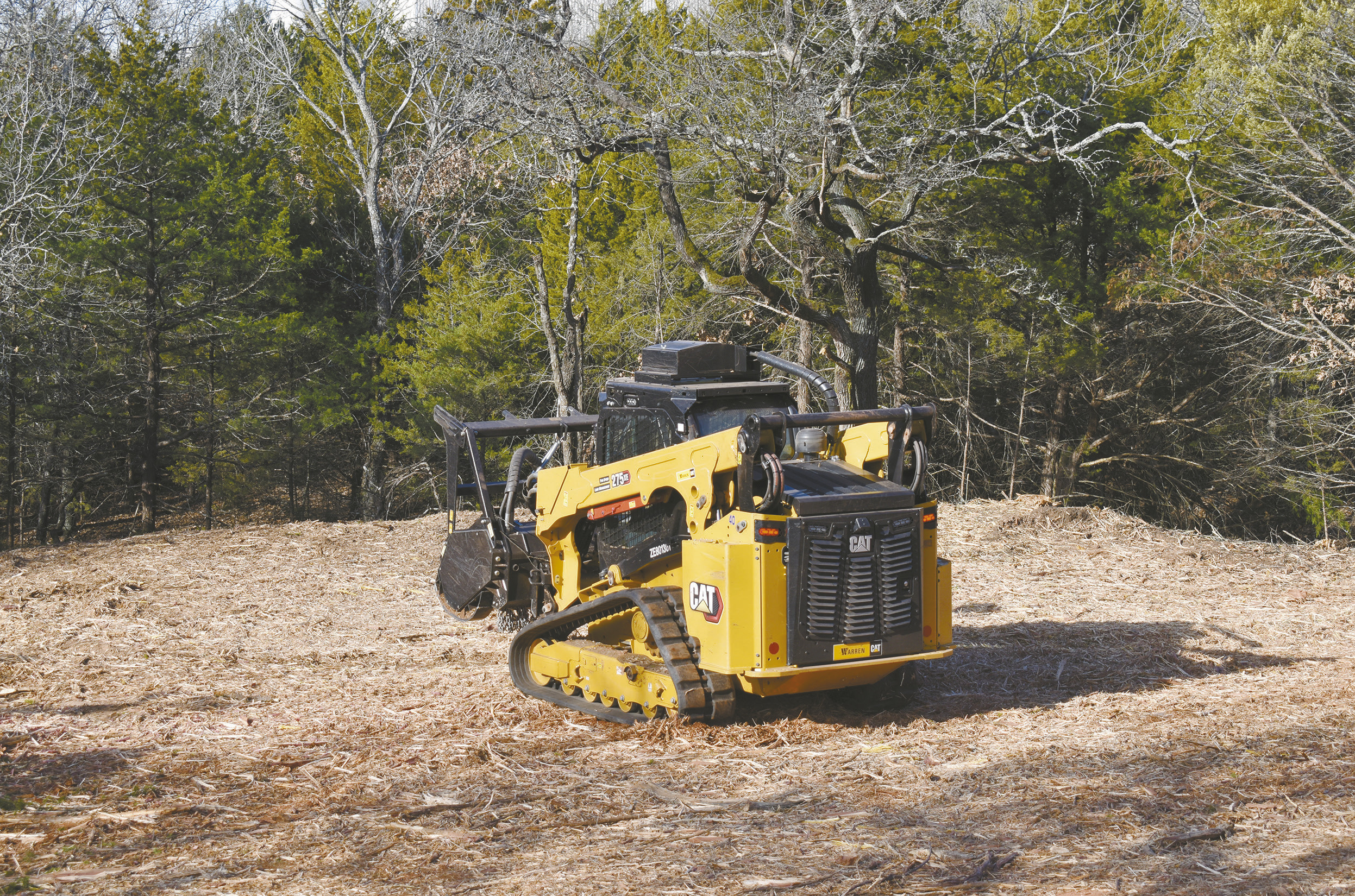
Once a spot has been located, a technician goes out and uses various tools over the course of a few days to clear out as many cedars as they can. More often than not, they use a skid steer with about three different attachments on the front to pull down the trees, and then chop them up.
Tripp said another positive is that the cedars are reduced to mulch, which provides erosion protection until grass starts growing back.
There are several benefi ts to removing cedars besides lowering the amount of fuel for wildfi res. Tripp said each tree removed returns approximately 30 gallons of water back into the groundwater system, with some returning as much as 100. This is significant in a drought-prone climate. Removing cedar thickets can allow more water to the system and reduce competition for the resource.
It can also make it easier for fire departments to maneuver and fight wildfi res when they do happen.
However, despite the benefits of mechanical removal, not everyone can afford it. Not to mention, Tripp believes the best way to truly remove cedars is fire, because it also destroys the seeds. A single cedar tree can repopulate a 40-acre area in a year by seeds alone.
He encourages landowners to look into joining local prescribed burn associations. They tend to have lower annual fees and take the neighbors-helping- neighbors approach to conducting prescribed burns. In Lincoln County, there is the Cross Timbers Prescribed Burn Association.
Tripp’s division also offers prescribed fire assistance, complete with burn plans, and other cost-sharing programs.
“It’s picking up a lot of steam, too. People are starting to utilize it,” he said.