
When Travis Marak graduated from the University of Central Oklahoma in 2007 with a degree in Photojournalism, he had little aspirations of running the family dairy farm he grew up on north of Meeker.
After spending a year in Peru teaching English and time off and on traveling to different parts of the world, though, he made the decision between 2012 and 2013 to return home.
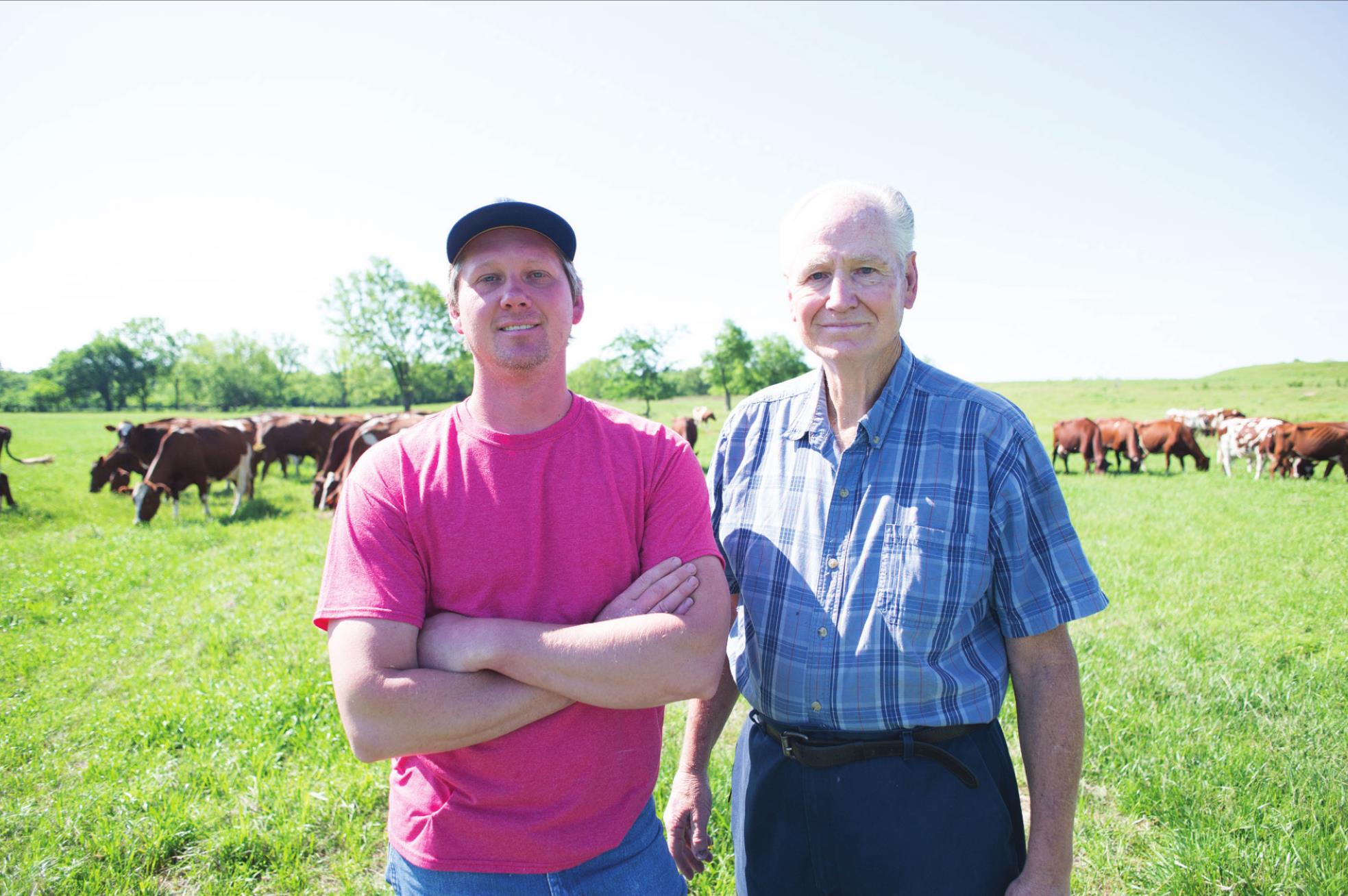
Today, he and his dad Steve continue running the operation that was started by Steve’s grandfather in the 1920s.
They milk 50 Shorthorn cows twice daily. Travis said he and his dad had two barns until fairly recently “when we moved the whole operation up the new building.”
His dad was milking 30 cows and Travis had 20. “I bought dad out,” he explained.
“Since the commodity price is so low, it just made sense,” Travis thinks.
“Each cow will produce about six gallons of milk per day,” they said.
Steve is the third generation and Travis is the fourth. But things are much different, of course, than when Steve’s grandfather, Joe Marak, began the dairy nearly a century ago.
“I’ve been in the dairy business all of my life,” Steve explained. “I graduated from OSU in 1973 and that is when I returned to the farm.”
Steve and his brother Jim, along with their dad Wilford, operated the business after Steve and Jim returned from college.
Travis said they handmilked the cows for years before they started using machines.
Steve is 69, he says, and Travis is 36.
Steve remembers when there were 125 dairy farms in Lincoln County in 1972.
“A lot of people grew up with fresh milk,” he and Travis said.
“Today, there are only six others in addition to our two in this county,” they said.
Steve’s wife, Robbie, has been beside him all along. Their daughter, Stephanie Baker, is not involved in the business nor is her husband Jeff, Steve said. Stephanie is quality control manager at Shawnee Milling Co. and Jeff is a mechanic for OG&E.
Steve said his nephew, Michael Broudick, does his milking these days and Mike’s son, Jeff, feeds the baby cows. Travis’s cousin, M.G. Auld, also helps with the milking to give Mike a break every other weekend.
Travis handles about half of his own milking and Justin King, who is married to Steve’s niece, does it about half the time.
Travis pointed out the reason he returned home to work with his dad was “because I wanted to keep the farm going. I knew dad wouldn’t always be able to run the business,” he added.
“Another reason is people still wanted fresh milk. The milk you get here is better than anywhere else,” he firmly believes.
Travis said what makes their operation unique and distinguishes itself from all of the other dairies in the county is, “We pasteurize and bottle our own milk. By adding value to what we have, we could keep existing.
“The milk that comes from here comes from one herd and we can assure our customers and consumers of that,” he emphasized, noting that his competition can’t do that.
“It takes only five hours from the time the last drop of milk comes out of the cow until it’s in Anthony’s Foods in Meeker. We deliver to Anthony’s two stores in Meeker and Prague twice a week,” he said.
“Anthony Buoy is really good to work with. We couldn’t do this without Anthony’s in Meeker and Prague,” Travis continued.
“The Town of Meeker has supported us and our products very well. This area used to be huge in dairy farms,” he reiterated, recalling the vast number more than 40 years ago compared to today.
He related that Oklahoma City is their biggest market.
But he stressed, “We sell more milk in Anthony’s Foods in Meeker and Prague than anywhere else,” referring to the impact that COVID-19 has had on their Oklahoma City sales.
“We’ve been blown away by the town of Meeker and the way they have supported us. They’ve picked up much of the business that we lost in the Oklahoma City area due to COVID-19,” Travis said.
Pointing to milk inside a huge tank, the pair said there was about 200 gallons of milk in it.
“That’s from milking twice the day before and this morning,” they noted.
“On Thursday, the bottled milk will go to Oklahoma City, Shawnee, Edmond and Luther,” Travis said of the milk in the tank awaiting to be pasteurized and bottled.
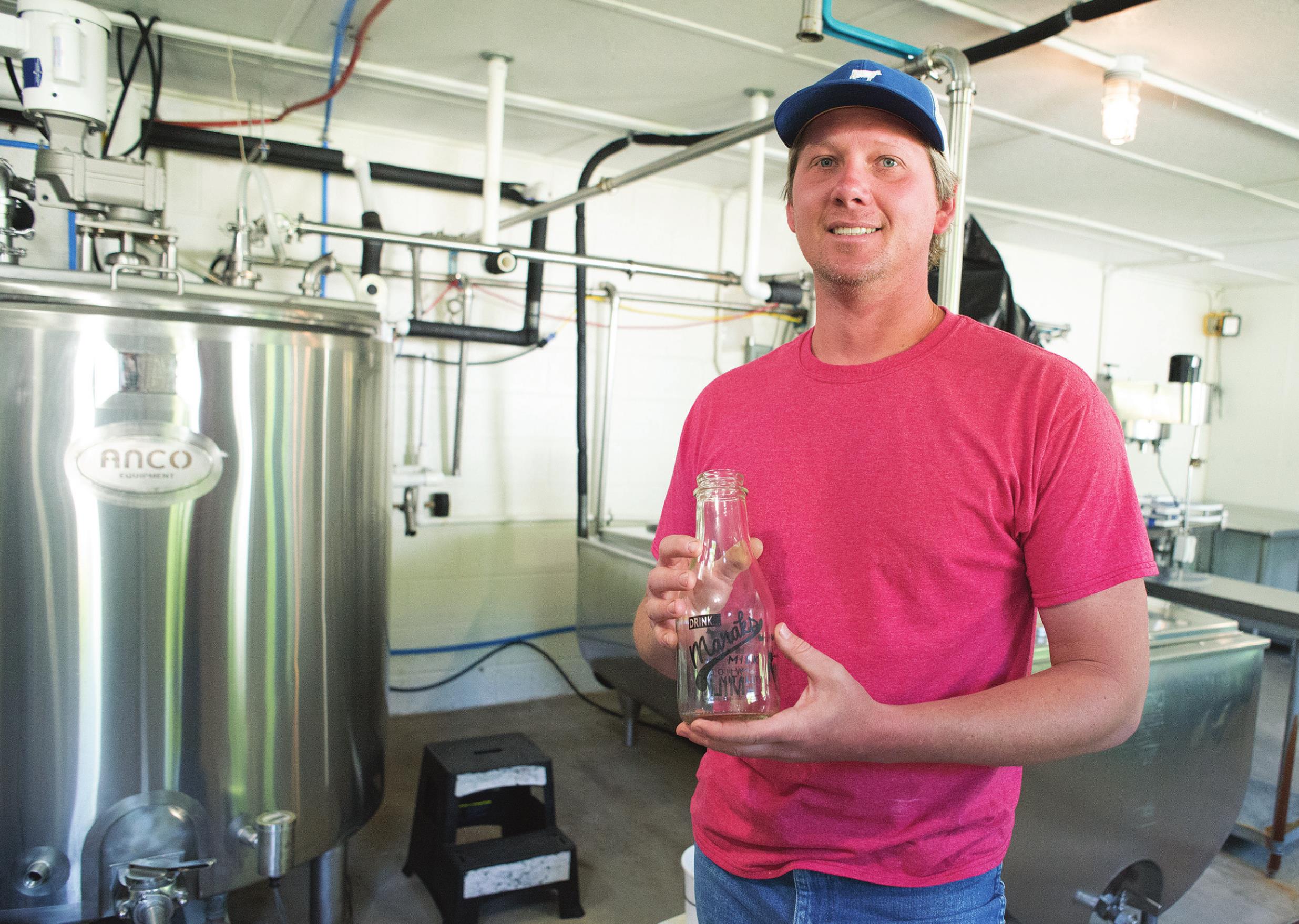
“To be able to pasteurize and bottle our milk, we built this new building four years ago,” Travis stated. “We are in our fourth year bottling and pasteurizing our milk,” he noted.
The two rooms where the raw milk is stored, and then pasteurized and bottled are almost spotless. There are pans of water located in front of the doors where a person goes from the room where the milk is stored to the room where it’s pasteurized.
A person must step in those pans before going from room to room, helping keep the pasteurization room as clean as possible.
Moving to the area where the milk is pasteurized and bottled, Travis says, “This is what is different. We get 20 inspections a year, more than one a month.
“They inspect everything, all the equipment, the milk, the water, clear down to the bottle caps,” he said.
Travis pointed to the 300-gallon tank where the pasteurization is done. “It’s low temperature pasteurizing. We heat the milk to 145 degrees to keep anything from getting in it, then we bring it back down to 45 degrees. It must be bottled cold,” Travis explained.
Steve said Richard Smith handles the pasteurization and bottling of the milk and “about everything else.”
Travis said Richard, who has worked for the family since back in the 1960s, handles some of the delivery. “Richard’s daughter Savannah is helping out, too,” Travis related.
To acquire the equipment needed, Travis called all over the country.
They milk Shorthorn cows.
“They are gentle, easy to take care of, they don’t have as many problems with diseases and they breed back easily,” Steve says, as he looked over the herd grazing in one of their pastures.
Travis mentioned his dad got to raising the Shorthorns. “He’s been all over the world,” he said of his father.
Steve said Shorthorns are kind of a rare breed noting, “everybody else had a mix of other cows.”
He pointed out, “Their lifespan is generally 10 to 12 years and I’ve had them live up to 15.”
“They convert their food into milk better and Shorthorns produce significantly less cream, about 3 ½ percent,” Travis stated.
“One summer after I graduated from high school,” Travis recalls, “my sister Stephanie and I got to go with my dad and my mom to South Africa to that country’s National Show.”
Steve said he was asked to judge the show. “They call it the Royal Show,” he explained.
To contact Travis for any further information, call 405-650-9304.
Central Oklahoma has been known for farming since it was settled, so it’s no surprise that we have a rich variety of agricultural pursuits. We’ve put together a four-part series on farms that fill a special niche and that we think you’ll find interesting. This week, it’s the Marak Family Farm. Next week, it’s chestnuts in Chandler.