
There isn’t much more terrifying than watching someone choke and not knowing what to do. There is the Heimlich, but even that has the potential to cause further injury, especially when a child is choking.
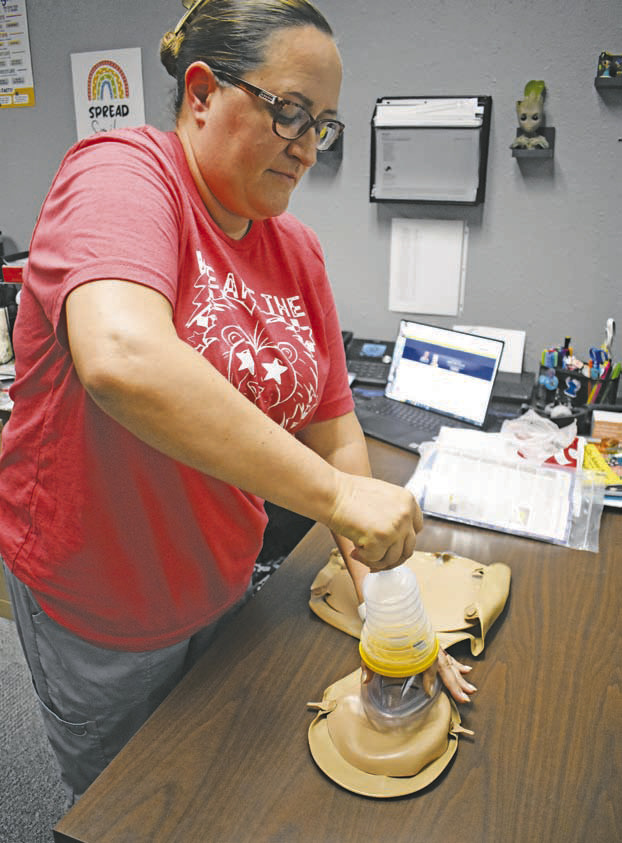
Chandler Public Schools is introducing a new device to help make their cafeterias safer and can be used by almost anyone effectively. It’s called LifeVac. It’s a simple device that more easily and safely dislodges food stuck in a child or adult’s throat.
“LifeVac is quite a marvelous little tool to use because, in all honesty, a lot of us, if you Heimlich, you have to get in the right place. You have to do it exactly the right way, but even then, you could injure somebody,” School Nurse Jacalyn Allen said. “And sometimes, some of use have short arms and we can’t exactly do it effectively.”
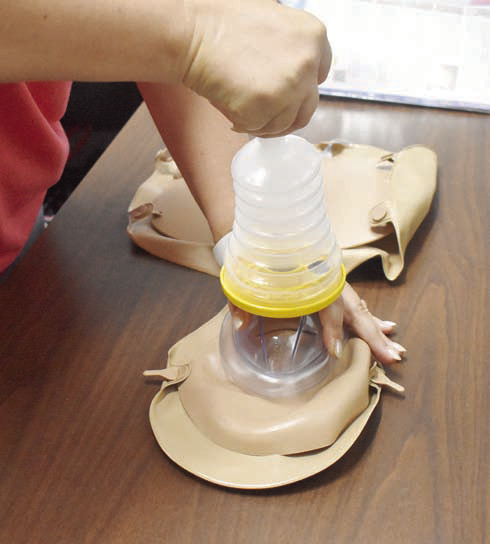
The way to use the device, Allen said, is that the user puts it on the child’s mouth and pushes it down, releasing air. It creates suction so that when pulled back up, it pulls out whatever is stuck in the throat. The device was created in 2014 by Arthur Lin who overheard a mother crying in the hospital after losing a child who choked on a grape. He worked with doctors to establish a research and development facility where they produce the simplest, safest method to save an aspirat- ing person, according to the website.
In the 2021 trial, LifeVac had a 99 percent success rate with medical students. As of August 2024, the device has saved 2,688 lives, according to the LifeVac website. The company also replaces every LifeVac used for free.
Allen said she applied for a grant for the devices about a month ago and within a week, the company responded. She received the devices a week ago and has been writing up the policy and procedures.
There is an adult size and a child size, with one device each being kept at the Park Road Elementary cafeteria and East Side elementary cafeteria. Training on how to use the devices will be held next week for any school worker that would like to learn how to use them.
However, Allen said the school would prefer that someone who is CPR-trained using them, in case the food can’t be dislodged or the student is unconscious.
Allen said they might look at implementing them in more places so that the middle school and high school can have them on hand. A majority of choking incidents happen in younger elementary children, which is why they started in those schools, she said.
Allen said she is always looking for different grants to help with school health and safety. She’s already applied for several AED grants and was able to get a good discount so they could purchase four more. They have AEDs placed where they can respond to an emergency within three minutes.
“I’m trying to get ideas from the school on what do they need, what they can use. We started the health and safety committee,” she said. The group is made up of the school nurse, the principal, a teacher, parent, and also a student. “We’re using several avenues and you ask them what’s something that we can do safety-wise. What’s something health-wise, and then see what is the need out there.”
Allen said there is a major grant through TSET that opens in January where she can apply for something for every school site. She is currently working to find the best way to apply that grant.