
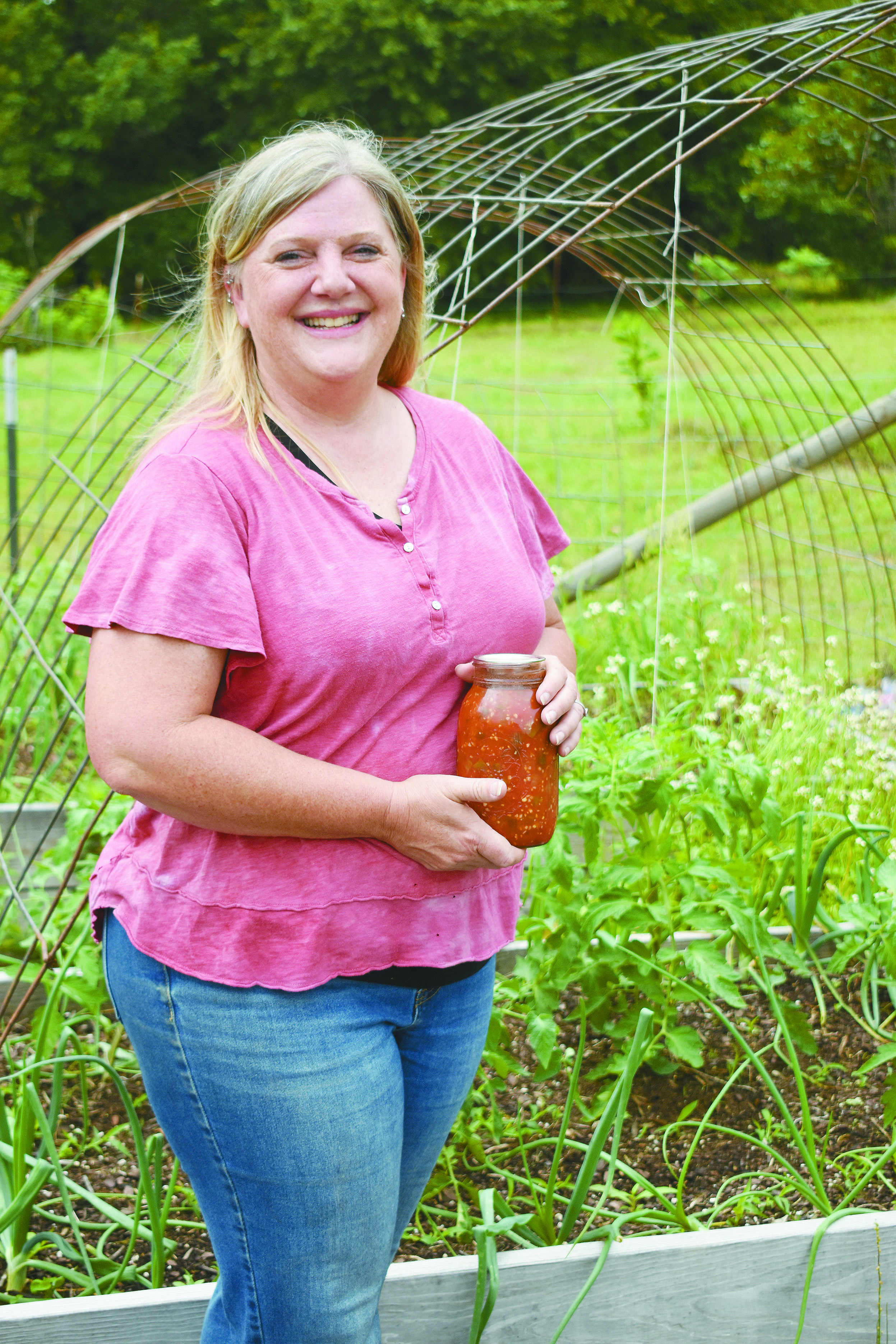
When a strong Oklahoma wind knocked apples from her tree, Lisa Smith didn’t know it would change her life.
“That’s what started the whole thing,” said the Chandler homesteader. “Was the wind knocking down my apples.”
Smith had recently moved from Colorado, where she sold photography at local farmers markets. “In Colorado these would go for $100-$150. Here I can’t sell it for $10,” she said.
So when the wind un-appled her apple tree, Smith turned to apple butter.
“I thought I couldn’t waste these, so of course I started bringing it to the market, and people were buying up my apple butter to the point where that was the only thing I made money off of,” she said. “Was my apple butter.”
That apple butter started her homesteading lifestyle. Smith now produces everything from canned vegetables to face wash and even dog food all in her backyard.
“I always worked corporate jobs and I decided that I was sick of sitting down all day long, so I decided to homestead,” she said.
Smith, a mother of two teenage boys, grows a wide variety of crops, including tomatoes, cucumbers, sage, basil, sweet and hot peppers, potatoes, arugula and more. Her setup includes 12 raised beds and a 60-by-40-foot garden.
Growing and canning her own food helps Smith preserve the harvest and reduce waste.
“Think about how many times you buy vegetables, you bring them home, you never use them and you throw them out,” she said. “The last thing that a homesteader wants is waste… I wanna keep it through winter. I want to be able to eat it fresh through the winter time. So storing it and canning it is a way to stretch it out throughout the winter and not have to purchase it at the store.”
Smith is part of a larger, national growing trend.
According to Google Trends, a software that tracks the relevance of a search over time. “Canning” searches have grown year over year, with a significant spike in 2020, thanks to Covid-19.
“I don’t want to be dependent and panic with the grocery store.” Said Smith “Like what happened during Covid. I want to be able to provide and be safe.” Added Smith.
Canning, for Smith, is both personal and practical. “I grew up knowing about canning, but not physically doing it myself,” she said. “My grandmother canned a lot… So I decided that if she canned, and she had been canning forever, then I would learn a little bit of the new practices plus the old practices, and then by trial and error would see what actually worked and what doesn’t work anymore.”
Like many who adopt this lifestyle, Smith learned through a mix of the internet and community support. “So I slowly started teaching myself via You-Tube and trial and error,” she said. “I also use the OSU extension for a lot of local stuff. I took a couple classes as well at Gordon Cooper. They offer some classes on farming.”
The learning curve hasn’t stopped her.
“You pick one thing and you try and master it, then you pick something else and you try and master that. You do a little bit at a time,” she said. “Just start doing it. Trial and error.”
Smith prefers water bath canning over pressure canning due to the cost, and she’s careful to test seals and follow food safety protocols. “Canning food preserves food, then I’m not throwing it away,” she said. “I always lift by the actual lid. That way if it pops off by the seal I know it wasn’t a safe seal.”
While self-sufficiency is a major perk, Smith says the best part of homesteading is the people.
“I love meeting the people. There are a few older gentlemen and older women that will come by every single week and you get to know them by name,” she said. “I love the people that are working at the farmers market—we all get along really well. When you are homesteading, there’s a lot of time by yourself, so it can start to get really lonely. So it’s nice to get out and meet the neighborhood.”
She’s also noticed her tastes have changed since growing her own food.
“I don’t like strawberries. Never have, and then I tasted my strawberries for the first time and now I like strawberries,” she said. “Tomatoes don’t taste the same as they do in your garden.”
For Smith, this isn’t just a lifestyle. It’s a calling.
“I get to be a stay-athome mom now,” she said. “That’s how it should have always been.”