
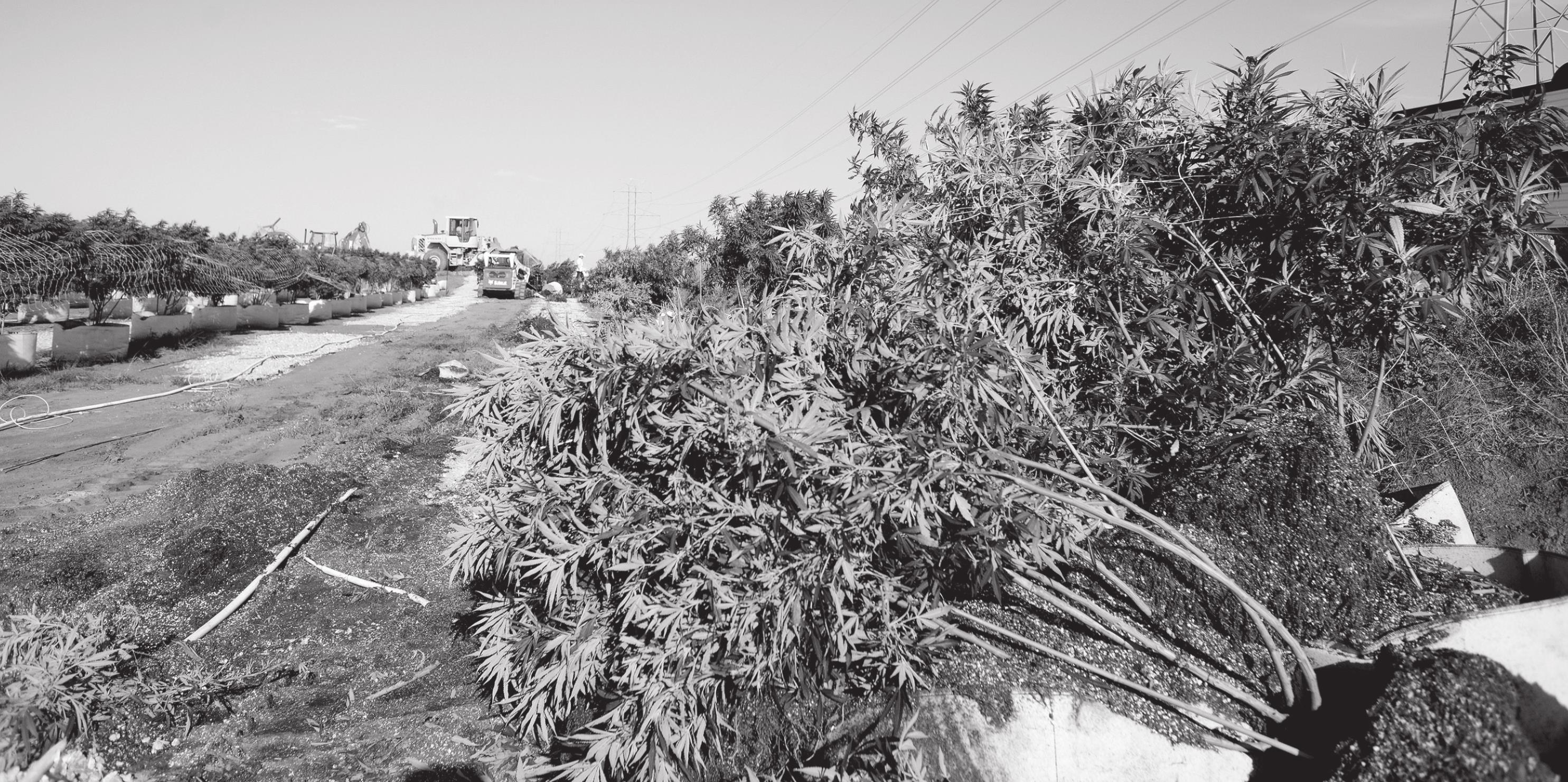
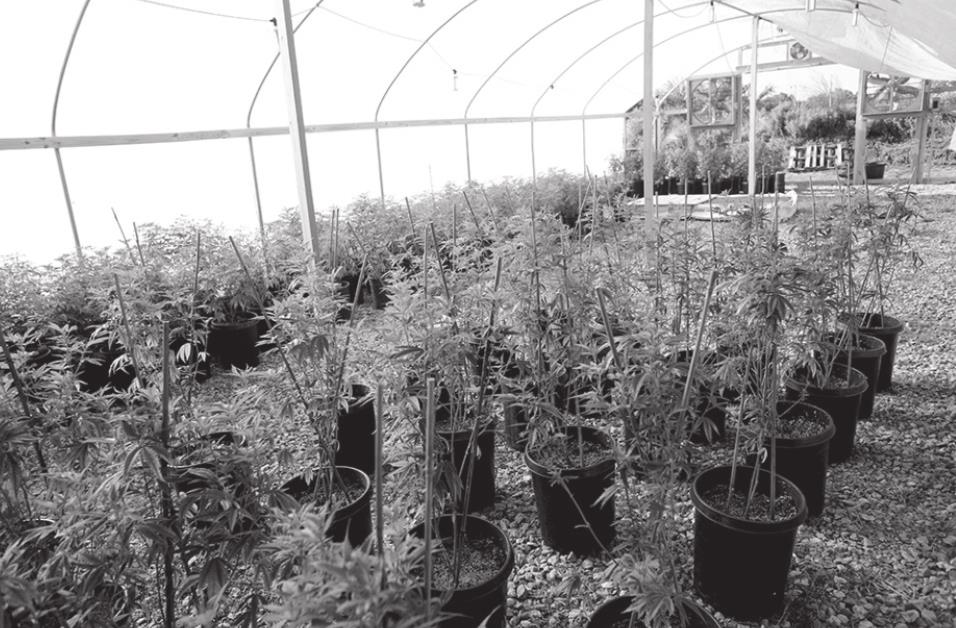
A Special Operations team and other agencies had raided an illegal marijuana grow operation northwest of the Jacktown intersection in Lincoln County just a few hours earlier.
Agents and county crews were still cleaning up the site when an An Assistant District Attorney in Lincoln and Pottawatomie Counties commented, “For every legal operation we estimate there are three illegal ones.”
That source said most recently, “45 days ago the ratio of illegal to legal grow operations was 3 to 1.
“We have recently discovered a number of grow operations are shutting down.
“We don’t know the reasons a number have been shutting down, whether it’s our enforcement or economics,” he noted.
He explains, “The perception is they’re going other places because of enforcement. They don’t want the convoy raiding them at 7 a.m. in the morning.”
The assistant DA cited what he claims is “Fueling the boom.”
He pointed to lower property value, low taxes, low fees and lax enforcement.
“Some counties have no enforcement at all. It’s a matter of mathematics,” he thinks, when counties don’t have officers enforcing it and leaving that to the Oklahoma Bureau of Narcotics.
“How many raids can the OBN do a week,” he posed the question, and then added, “2-3 maximum,” in answering his own question.
A Special Operations Team was set up in Lincoln and Pottawatomie County in early June. “I think we are pioneering the enforcement,” he stated.
Lincoln County commissioners in their most recent meeting on Aug. 23, approved eight new Oklahoma Medical Marijuana Authority Certificates of Compliance, six renewal applications and one change of location.
On the agenda for their Aug. 30 meeting, Pottawatomie County commissioners had five new OMMA Certificates of Compliance to consider for approval.
Each growing, dispensary and processing operation must have a county permit, a Certificate of Compliance from the OMMA and a license from the OBN to be legal.
According to information from the OMMA, in Lincoln County there are a total of 280 OMMA facilities. This includes 18 dispensaries, 232 grow operations and 28 processors.
Lincoln County Clerk Alicia Wagnon said Monday, “We have approximately 344 OMMA businesses in Lincoln County.” She explains, “These
She explains, “These are facilities in unincorporated areas outside of cities and towns. Those in cities and towns must obtain permits from them,” Wagnon added.
Lincoln County Commission Chairman Lee Doolen said, “I’m extremely conflicted. I hate government overreach, but on the other hand it’s illegal by the federal government and highly regulated by Oklahoma law.”
Doolen believes, “It’s hurting our longtime generations who have lived on the land for years and even newcomers who have built new homes.”
Still, Doolen, says, “It’s a major conflict within me. It’s a terribly interesting situation,” he thinks.
But he’s convinced the number of marijuana grow operations, “Are a major burden on all utilities. I don’t know what effect it’s having on the Aquifer.”
District 1 Commissioner Carl Munson said, “The only thing I see is a lot of traffic on roads that weren’t made to handle the traffic and loads. Other than that, I don’t see much negative.”
The largest raid in Lincoln County to date came around Tryon which is in Munson’s district. Agents confiscated and destroyed around 40,000 marijuana plants.
Munson addressing that, said, “On any of the illegal operations it could overload the rural water systems. I haven’t heard of any electrical concerns,” he noted, but he pointed to the problems last summer and especially last winter with the rolling blackouts.
“Is that going to create a burden on the electrical system? I think so,” he said.
The district 1 commissioner is hopeful, “they (law enforcement) can get a handle on the illegals and get them all on the same playing field. That’s my biggest concern,” he said.
District 2 Commissioner Marlon Miller believes, “It they’re going to be legal and pay taxes and all of that, I’m OK with it. But if they’re not to going to be legal, I’m not.
“We have to think long term,” he said, adding, “what’s best for our communities.”
Miller reiterated, “if these operations follow all the regulations with water and do what is best for the community and the county, I’m OK with it. But anything short of that I’m not.”
He cited a significant increase with truck traffic and normal traffic as well due to these operations.
“There’s a bunch of these operations in my district it seems like, though I don’t have the numbers,” he said.
In Pottawatomie County, OMMA figures show there are 356 total facilities. That breaks down to 36 dispensaries, 272 growing operations and 46 processors.
Chad Larman, the Emergency Management Director in Pottawatomie County, explains those seeking county permits in unincorporated areas for any growing operation, dispensary or processing operation must file that with his office.
He said, “These are Certificates of Compliance.”
“They have to be approved by the County commissioners,” he said.
The permits he currently has on file, he said, is 191 for grow operations, seven for dispensaries and 29 processors.
Larman said, “We have a folder full going on the next agenda. They continually just keep coming in,” he noted.
However, he does think the numbers have slowed down a little bit recently. “In the past we had 10 to 15 for an agenda, now we are having 5-10.”
Larman says he thinks it’s slowed down a little bit due to saturation. He also pointed to “some growers just packing up and leaving after the recent raids.”
Any dispensary, grower, processor, or researcher issued a license authorized is required to obtain an Oklahoma State Bureau of Narcotics and Dangerous Drugs Control (“OBNDD”) registration prior to possessing or handling any marijuana.
Several attempts to obtain figures from the Oklahoma Bureau of Narcotics for this story were unsuccessful.