
The paved road northwest from Wellston winds through trees and over creeks before reaching Fallis, where aging houses and former railroad beds offer only hints of what the town once was.
For a community of about two dozen people, the road is surprisingly smooth. Near the edge of Iowa tribal land, longtime Fallis resident Kathy Johnson said it was paved by the tribe so people could travel through to visit the grave of a chief. A sign once stood near the bridge dedicating the road to him but has since disappeared.
Johnson has watched Fallis change since her family bought land nearby in 1978 and moved there two years later. She raised eight children and many of her 14 grandchildren there, served for years as the town treasurer and still lives about a half-mile east of town.
“When we first moved here, there were still a lot of the old buildings,” she said. “It was a really beautiful town. I mean, it was old, but a lot of the houses were still there.”
Deborah Hull, a former Fallis mayor who was recently elected to the town’s new board of trustees, and her family converted what Johnson described as the town’s former “strip mall” into their home. The row of buildings had once contained the post office, a grocery store and at least one other business.
Across the street stood the remains of another grocery store operated by Zula Lennon Murphy, whom Johnson said was the last person to run a store in Fallis.
“Fallis has so much beautiful history,” Johnson said. “There were railroads. There were shops. It had a jail, of course. There was one main railroad, the Katy Railroad, but then there were others that came through because it was a great crossroads.”
According to the Oklahoma Historical Society, Fallis began as Mission before being renamed in 1894 for its principal developer and first postmaster, Judge William H. Fallis. At statehood in 1907, Fallis had 321 residents, though Johnson said the population may have reached 350 to 400 at its peak. The town had a school, stores, hotels, banks, doctors, saloons and a post office. Two cotton gins operated in town. In 1903, 14,000 acres around Fallis produced 10,500 bales of cotton worth $500,000, equivalent to about $19 million today.
Like many other frontier towns, Fallis depended heavily on the rail lines running through it and began to decline when rail service was phased out.
As its commercial importance faded, Fallis became known more for the nationally recognized writers and poets who flocked to its picturesque landscape for inspiration.
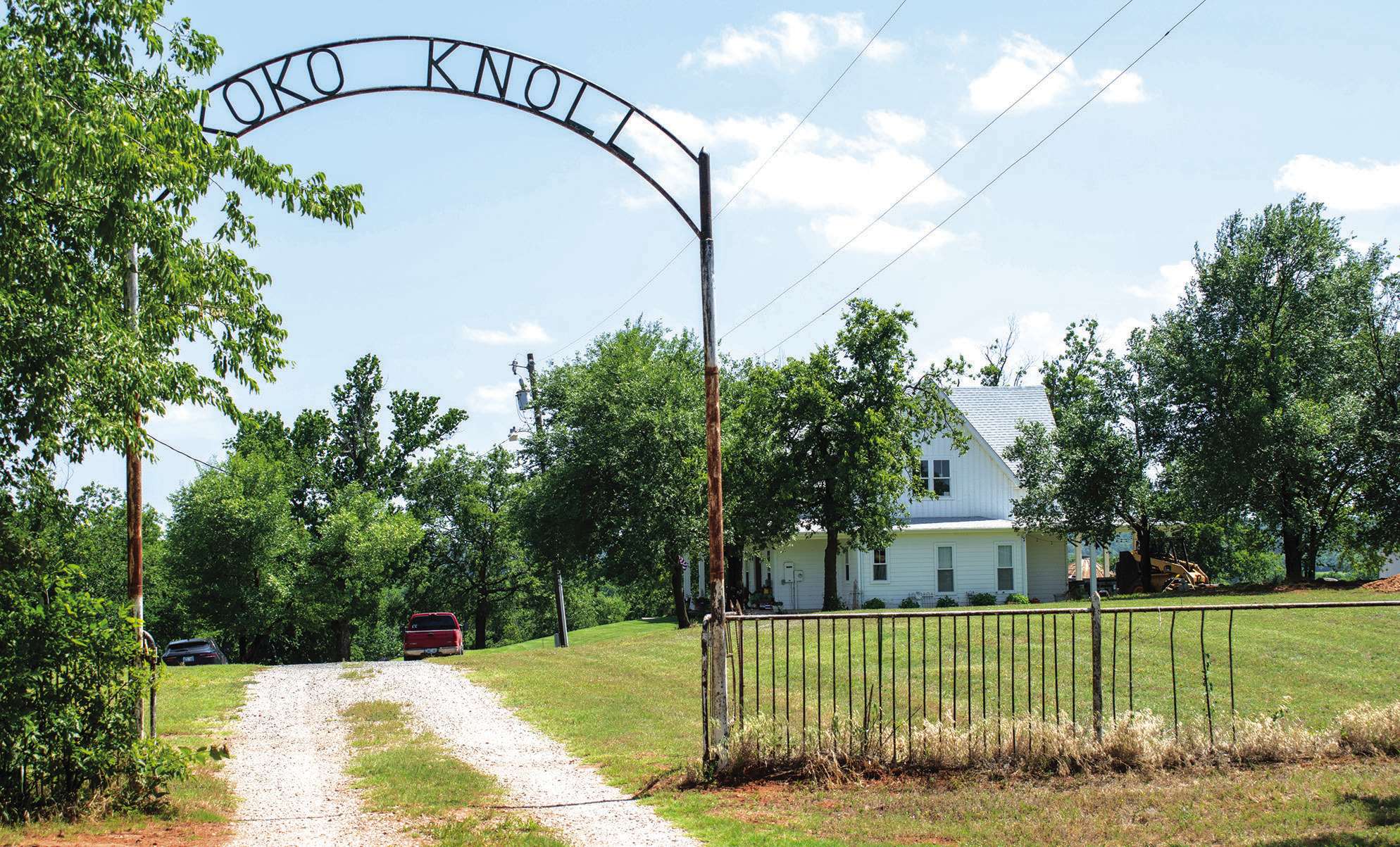
Blanche Seale Hunt, author of the “Little Brown Koko” children’s series, lived at Koko Knoll, a homestead on a hill overlooking Fallis. Johnson owns one of Hunt’s books and has a family connection to the writer.
“Blanche Seale Hunt was my sister-in-law’s aunt, so it’s kind of interesting,” Johnson said.
Koko Knoll was one of Fallis’ most distinctive homesteads. Hunt’s husband, Eugene, cultivated a commercial iris garden there with more than 150 varieties, drawing visitors each spring to buy flowers and meet the author.
“He had irises that people came from all over the United States to buy,” Johnson said. “The lady who lives there now has found some that still have the little markers. A lot of them are gone, but I believe he cross-pollinated them and made his own varieties. It was a beautiful place.”
TheoriginalKokoKnoll home later burned, and a new home was built on the property. Just beyond it is the hill that gave Fallis one of its old nicknames.
“Right past there is this really long hill,” she said. “We used to sled down it when my kids were little, and they called Fallis ‘the long red hill.’” Oklahoma’s third poet laureate, Jennie Harris Oliver, also lived in Fallis, where writers from across the state made annual springtime pilgrimages to her home to discuss their work, offer advice and toss coins into the wishing well.
Vingie E. Roe set her 1916 novel, “A Divine Egotist,” in Fallis, while Delbert Davis, Oklahoma’s seventh poet laureate, wrote “Pipe Dreams” there in the 1960s.
“From what I was told, they all used to critique each other’s work, which sounds so fun,” Johnson said. “They were all really close. It was really inspirational here.”
Fallis also has some stories of its own. Johnson said paranormal investigators have visited the area after hearing local legends about a bridge and a house.
“There’s Crybaby Bridge, where supposedly somebodythrewtheir babies over when you weren’t supposed to have illegitimate babies,” Johnson said. “And there’s an oldhousewhereamanwas supposed to have killed all of his family. They say it’s haunted.
“I’m not a big believer in that stuff,” she added. “But it makes it really interesting.There’s a lot of folklore about that stuff.”
Fallis also holds a notable place in Oklahoma’s Black history. According to the Oklahoma Historical Society, one of Fallis’ two newspapers, the Fallis Blade, had a Black editor in 1904.
Frederick Douglass Moon, an influential educator and the first Black president of the Oklahoma City Board of Education, was born in Fallis, as was Medal of Honor recipient Riley L. Pitts.
Another Fallis native, Jesse B. Blayton Sr., became the first African American to own and operate a radio station when he purchased WERD in Atlanta. During the civil rights movement of the 1960s, WERD operated in the same building as the Southern Christian Leadership Conference, led by Martin Luther King Jr., who frequently visited the studio to announce the organization’s activities on the air.
Little remains of the segregated school that once served Fallis’ Black children, but Johnson remembers being shown where it stood.
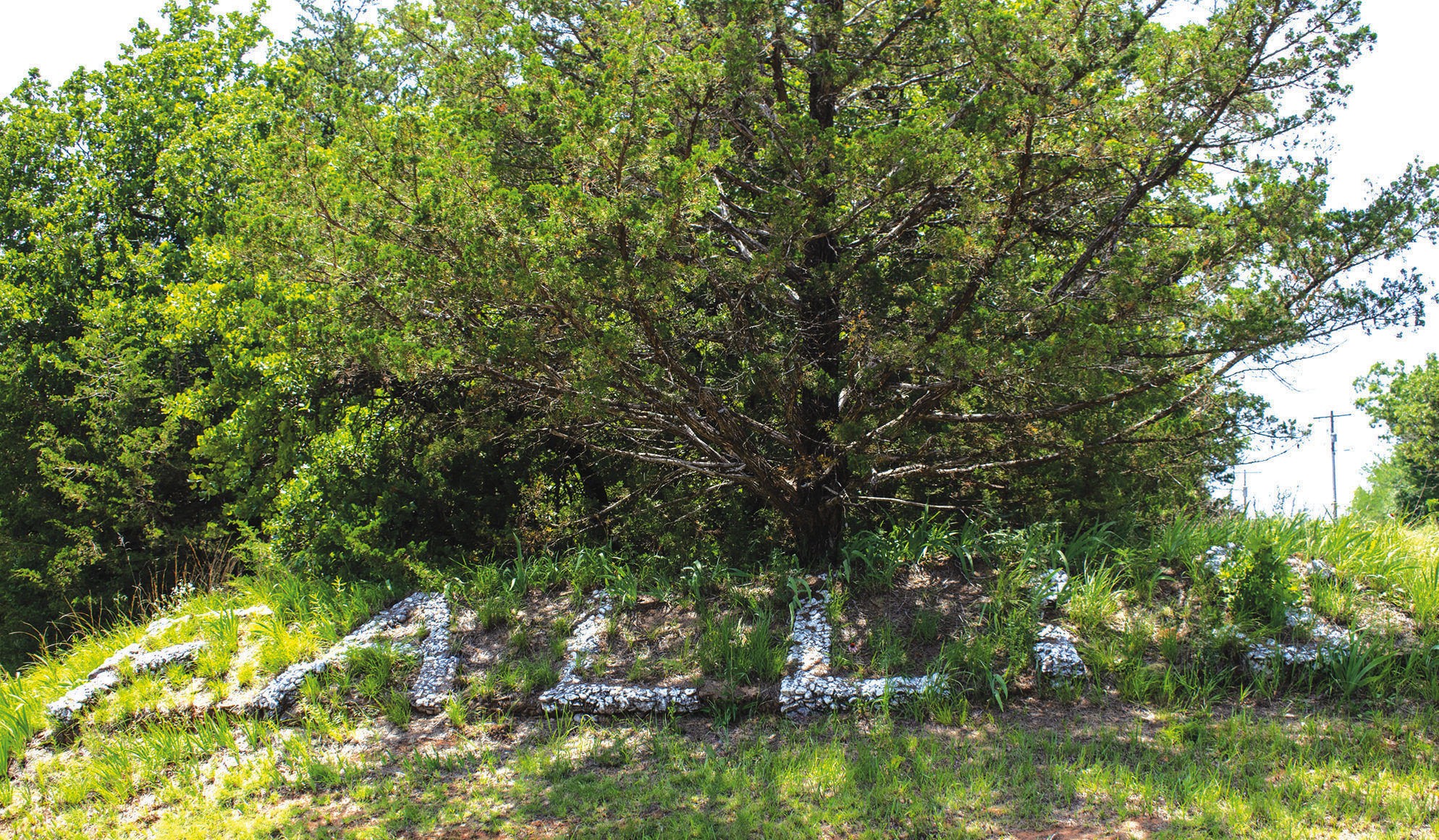
“If you go to the Fallis sign by all the rocks, a little bit to the right there’s an old road, and the Black school was over there,” Johnson said.
Fallis’ population had declined to 105 by 1950. A fire in 1960 destroyed many of its original structures, and the school later consolidated with Wellston.
Yet when Johnson arrived in 1980, Fallis still had a thriving community. Thatcommunityremained active into the 1990s, when Johnson, members of the Murphy family and several other residents bought the only church still standing in town and turned it into a gathering place.
“My first husband played the banjo. Dale Moffatt played guitar, and several other guys used to get together every Saturday night and play music,” she said. “It was so fun. It was just a really cool town.”
The former Fallis schoolhouse also remained a gathering place long after it stopped holding classes.
“The old Fallis schoolhouse used to have an annual reunion on the first Saturday in October for many, many, many years,” Johnsonsaid.“Peoplewho used to live here would come, and we’d have a big potluck. It was a real community. It was fun.”
When Johnson first moved to the area, the schoolhouse was also home to the Fallis Extension Homemakers.
“You just had to watch for the snakes,” she said. “It had an old wood stove, and we would meet there every week.”
Members sewed, canned food and entered their work at the local fair under the Fallis Extension Homemakersname.Similar groups from other rural communities competed alongside them.
The Saturday-night music, school reunions, homemakers meetings and other gatherings gradually disappeared as the people who sustained them grew older. By the turn of the century, only 28 residents remained. The 2020 census counted 21.
Fallis’ story is not finished, though. After years without a functioning board of trustees, questions over former school property Wellston PublicSchoolshaddeeded to the town forced residents to confront their lack of local government. District 3 Commissioner Lee Doolen said he called residents together because he did not want the county making a decision for a community where he did not live. He told them they could direct the commissioners on what to do or restore their own board and “dictate your own destiny.”
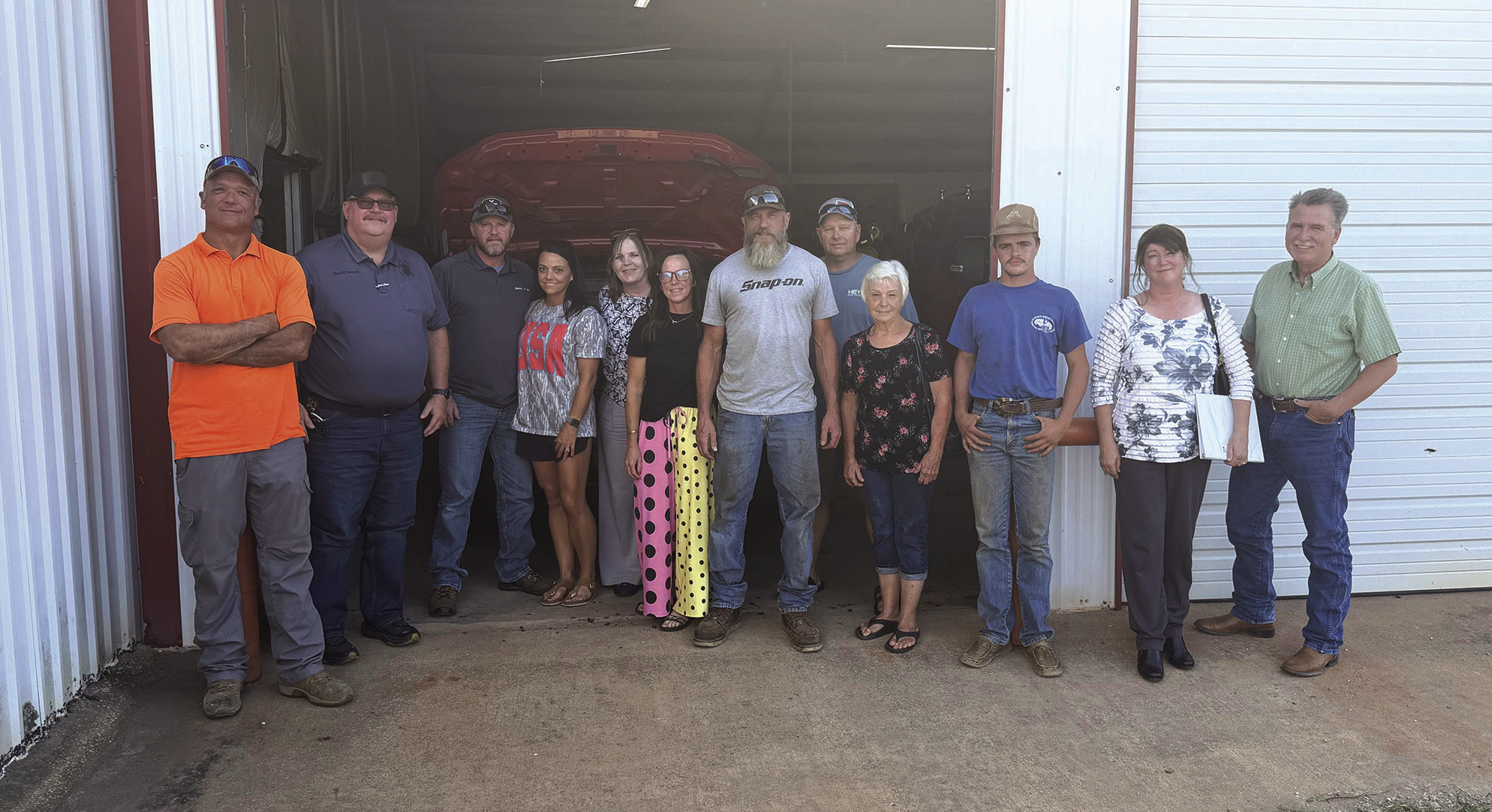
They chose the latter. To put that decision into effect, residents gathered for a special town meeting inside the Fallis Fire Department. Before electing anyone, they had to answer a more basic question:Where did Fallis begin and end?
Officials discussed the town’s old boundaries and information from the election board to determine who lived within the limits and was eligible to vote. Sheriff Kevin Garrett said the confusion could stem from how long ago Fallis was incorporated.
Residents then elected Randall Baker, Deborah Hull and Stephen Hooker as trustees and selected Baker to serve as mayor.
Baker, who has lived in town for four years and in theWellston area his entire life, said the decision to serve was personal.
“I care about Fallis, and I don’t want it to disappear,” Baker said.
He said the Board’s first priorities will be to assess the repairs needed at the community center and explore funding to restore the old schoolhouse. Fallis has no significant revenue or tax base, Baker said, but reorganizing the town will allow the Board to begin pursuing grants and other possible funding sources. Electric-service tax revenue has accumulated in a town bank account for about 15 years, and the new Board will be able to access it once the required paperwork is completed, according to Doolen.
Hull had previously secured a grant to construct a metal community building beside the former schoolhouse. Johnson said restoring the building after years without regular access or upkeep is one of the things she most hopes the new board can accomplish.
“I want to see if we can get some grants to help fix the building back up,” she said. “People could get together and play checkers or have potlucks. That’s going to be my first priority, because I believe we need a place for the community to get together.”
Many of the current residents are people Johnson has known for most of their lives.
“The people who live here now, I knew when they were babies, and they’re all grandmas,” she said. “I’m excited to see it becomeanactivetownand community again. I think there’s a lot of potential out here.”
After more than four decades near Fallis, Johnson said the town remains the place where she feels safest and most at home.
“I would rather live here than anywhere else on earth,” she said. “It’s just that good of a town. Even though we’ve lost a lot, the people who still live here are such good people.”
Editor’s Note: This is the second in a series of articles on Lincoln County’s forgotten towns.