
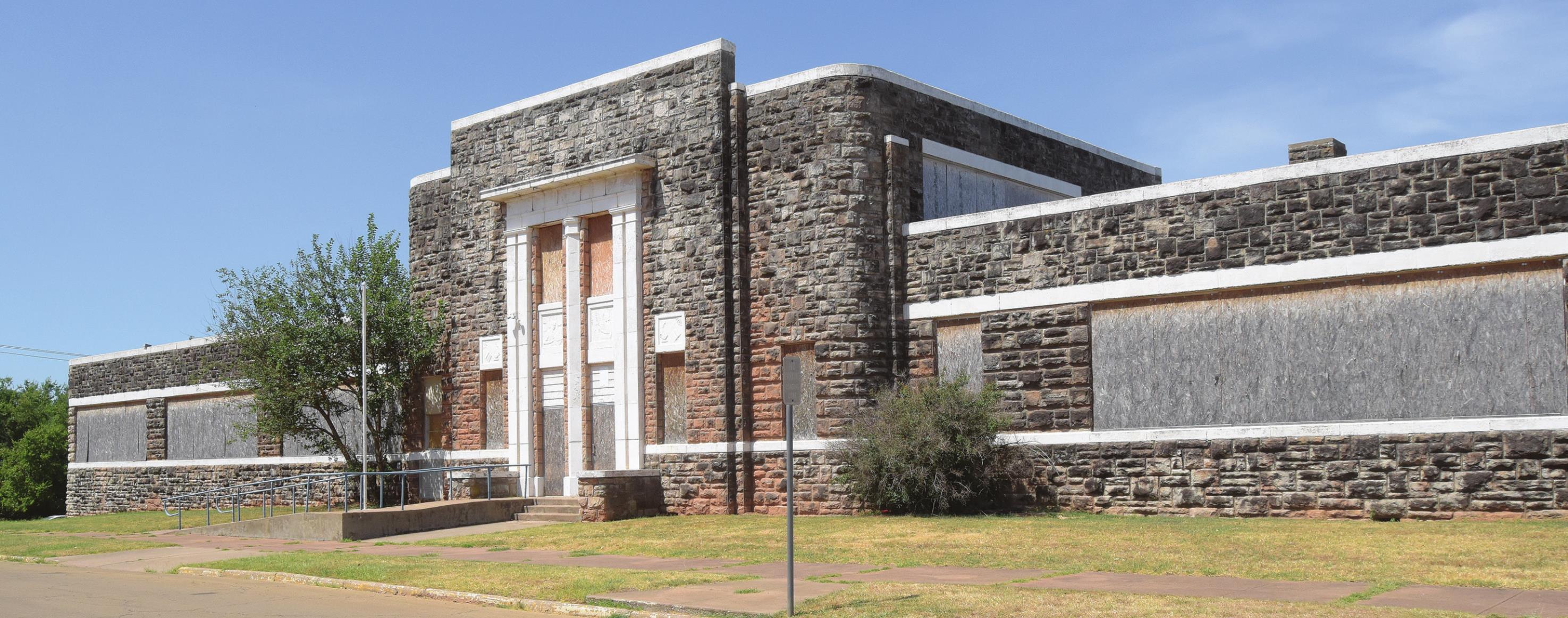
Community members of Chandler are coming together in an effort to save Memorial Highschool and bring a part of their history back to life.
Though much of the outer parts of the building remain intact the inside shows the aftermath of being left unused for several years.
In March of 2019 Kim Evans, who also sat on the committee that headed the renewal of the armory, formed the memorial committee along with several community members in order to take on this momentous task.
“It takes a lot of dedication, hardwork and people to take on a project like that” said Kim Evans.
However it was not until June of 2020, in the midst of COVID that they got the green light to continue.
“COVID definitely affected us but I think that moving forward we will start to see some action” Evans said.
While the goal is to renew the entire building the primary focus is to fix the roof, making the structure stable once again. Currently, the committee is in phase one of their plan, acquiring funds for the project, and applying for a list of grants.
Though a slow and tedious process the committee looks to the community for strong backing.
“The possibilities are really limitless for what we could do with that building but it needs to be a good and positive asset to our community again and that’s going to take a lot of work,” Evans said.
“Overall we want the project to be a media center or something for education, that can put that building back in use for further education.
“We want to be able to offer rooms to rent maybe for small businesses who can’t afford or don’t need a big store front but need a space. A place where people can come and have the internet available to them and we also want to team up with colleges and universities to be a satellite for some of the programs that they offer.
“So many people in the country don’t have or can’t afford the internet and we want to be able to provide that” Evans said.
Built in 1940, Chandler’s Memorial High School is not only a living piece of history but also holds architectural significance due to being constructed by the Workers Progress Administration under the direction of the Tulsa architectural firm of Koberling and Fleming and was completed within two years and cost nearly $110,000.
Not only did it stimulate jobs in the area but it also increased the economic viability.
Noted as the largest school built by the WPA the building is known for its impressive style, Art Moderne, and its construction out of native limestone, quarried from the Pospiesel farm south of the Sac and Fox Agency.