
Oklahoma’s wild hog population is expanding, including in Lincoln and Pottawatomie Counties, two state game wardens and the state director for USDA Wildlife and the Oklahoma Department of Food and Forestry say.
Scott Alls, the state director for USDA wildlife and ODAFF, said recently, “The wild hog situation is growing, but we’re also taking a lot more pigs.”
He noted, “I have 70 remote camera fired traps deployed around the state. We’ve nearly tripled the number of pigs taken. We have harvested 26,000 pigs this year in FY 2021.
“I have 35 guys working pigs and we now have four helicopters we are using,” he added.
Alls said one guy is working Pottawatomie and Lincoln County. “He has two of those traps in Pottawatomie and Lincoln Counties. We can always move the location of the traps anytime.”
He emphasized, “As an agency, we’ve gone from Beavers and coyotes to focusing on pigs. Now pigs occupy a little over 75 percent of our activities.”
Alls said that is based on the number of requests from landowners and the number is increasing all the time.
Game Warden Mike France, assigned to Pottawatomie County, said he’s seeing expansion of the wild hogs in several places. “I’m starting to get calls from people around Wes
“I’m starting to get calls from people around Wes Watkins Lake,” he noted.
I’m seeing some north of Earlsboro and also some expansion along the Little River east of U.S. 177.”
He has indicated previously they have been all over the Little River area west of 177.
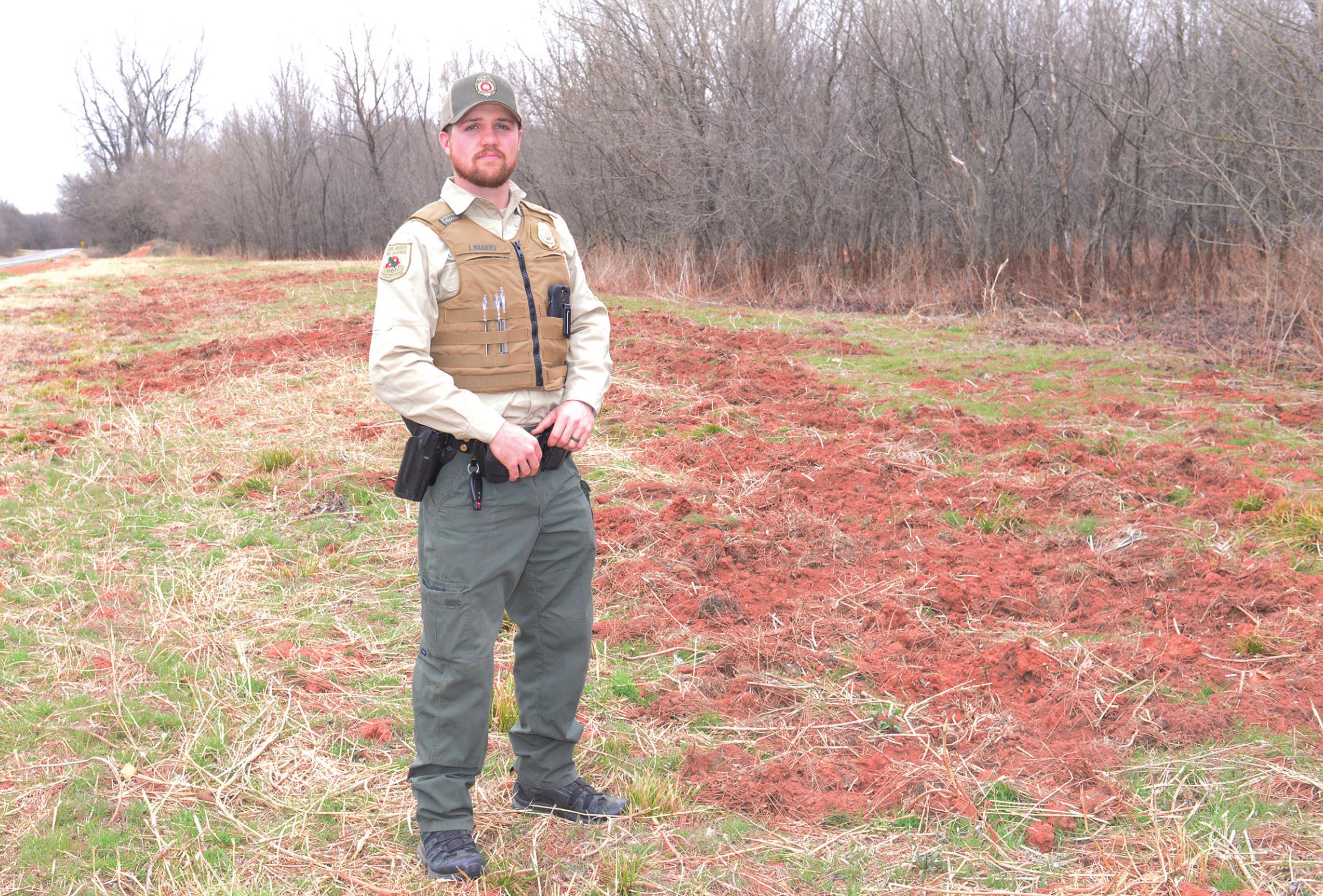
State Game Warden Jacob Harriet, assigned to Lincoln County, said last week “the pigs basically are all around water sources like the Deep Fork, the Quapaw, even the Cimarron River.
“The pigs are using that water source to travel up and down.”
He thinks there’s just as many if not more pigs than in early 2021.
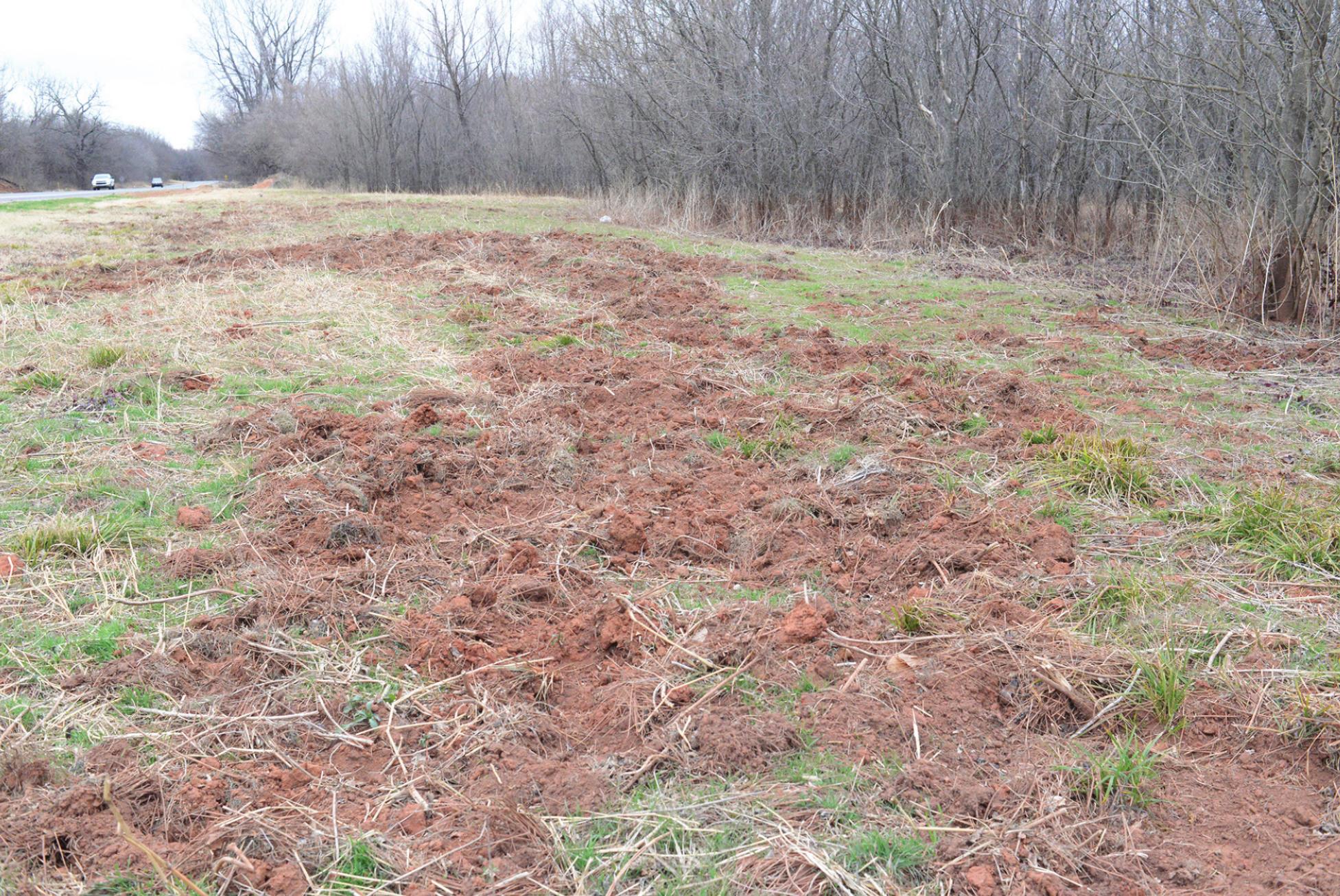
Alls stated, “The number of requests for coyotes has declined. The farmers, ranchers and landowners have realized that hogs are much more impactful on the land, cattle, pastures, row crops and hay crops. They tear up everything,” he said.
Alls mentioned along water ways as where the densest populations of the hogs seem to be. “They have to water at least one time a day. In really, really cold weather they stay in the tall grass.”
He stated, “They’ll come out in daylight when they haven’t had a lot of pressure.”
The director pointed out, “Where we are really seeing hogs are in about 72, 73 counties. In the northwest region there aren’t as many. But along the Red River and going southeast it’s bad. The Southeast is where they have the densest population. “That’s where they started out is in southeast Okla
“That’s where they started out is in southeast Oklahoma. It’s rough terrain and there is a lot of cover down there,” he knows.
He said the pigs travel as far as they need to in a day or night to feed. A study along the Red River showed some pigs were moving seven miles a night.
“We have pigs in all kinds of regions,” Alls stated.
Alls pointed to limiting factors on the hogs are really dry periods.
“They aren’t reproducing as quickly and we only find adult pigs, no piglets. We think the sows may not be in as good shape in those dry areas and aren’t producing the number of piglets after a really dry period.
“They’re tearing up everything. A lot of people want them gone and a lot of people are hunting them, too,” he said.
“There’s plenty of them and they’re destructive to property and the native habitat. They’re absolutely having an impact on the turkey population, deer fawns and quail nests.
“The main thing with deer is they are pushing them out of their areas,” Harriet said.