
Most Americans can recall at the drop of a hat what they were doing and where they were on Sept. 11, 2001.
Some of us were in classrooms, watching the horror play out on a TV screen. Some were at work or driving to work. Or at home.
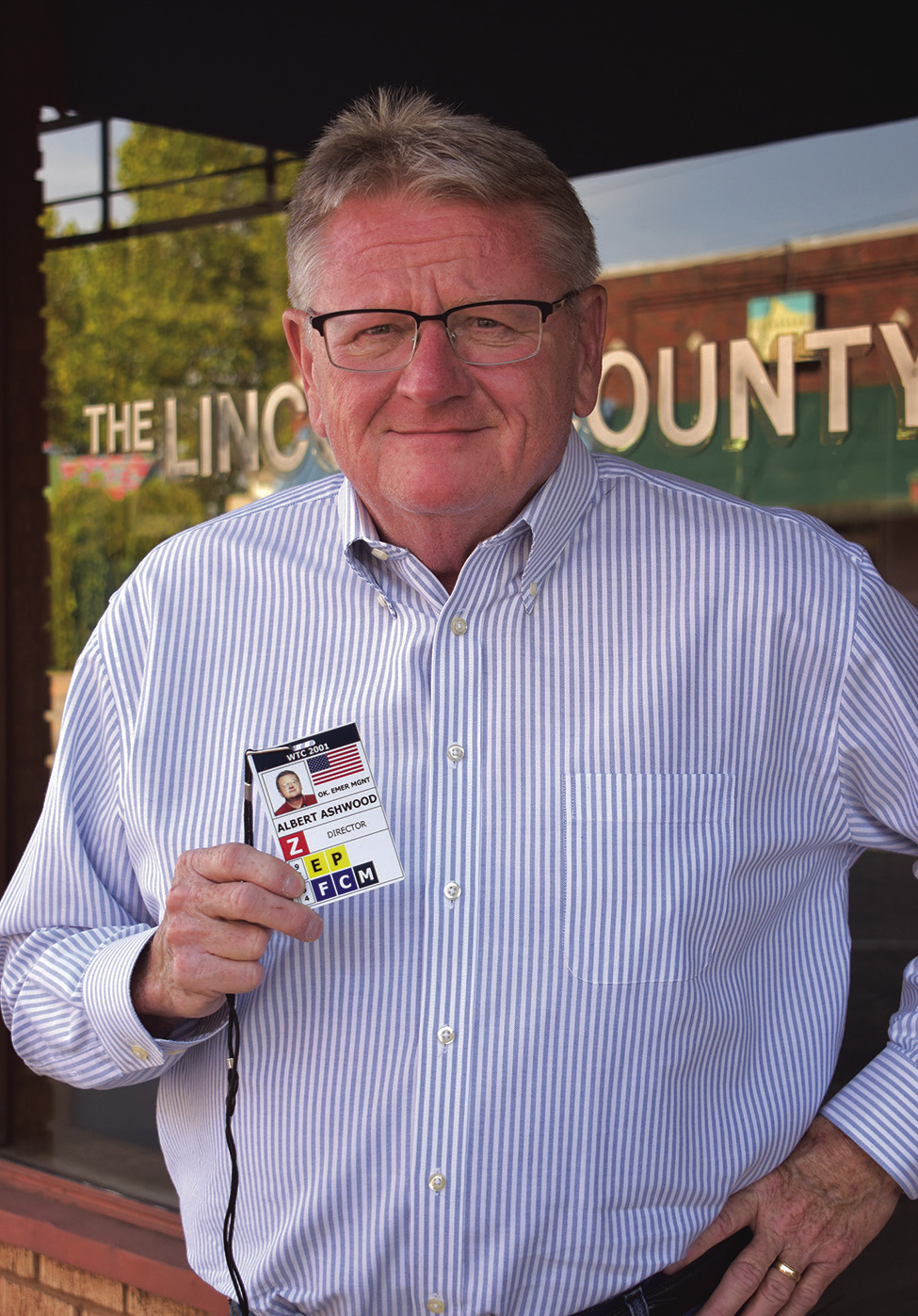
Albert Ashwood was sitting in his office, like many others. But for him, 9/11 was altogether something different. At the time, the Chandler resident was the emergency management director of the state of Oklahoma and only six years prior had worked through during the Oklahoma City bombing.
Coincidently enough, he was the only state emergency management director in office at the time. The rest were still at a national convention in Big Sky, Montana. Ashwood had left early to attend a family member’s funeral.
“On 9/11 I was sitting in my office and they came on television and said that a plane had struck the World Trade Center. And as normal, I thought that was some terrible accident that happened,” he recalled. “I don’t know how that could have happened, but I always thought it was an accident till the second plane hit.”
It was at that point that then Gov. Frank Keating came into his office and Ashwood spent the rest of the day in his office with a few other officials, watching the television. As is common when disasters happen, Gov. Keating reached out to then New York Gov. George Pataki to ask what he could do. Because of the Murrah bombing, the New York governor asked if they had anyone who could come and tell them what to expect.
It was then that Gov. Keating turned to Ashwood and asked if he would go to Ground Zero.
Ashwood recalled how eery it was to fly out to NewYork on one of the first flights since planes were ungrounded. Airports were empty, as were flights. He recalled maybe 20 people on his last flight. He arrived in Albany late, and at 5 a.m. the next morning, he was loaded onto a Black Hawk helicopter with others and flown down to Ground Zero.
Ashwood said he went with the mentality that he would do whatever they needed him to do, be it handing out water bottles or otherwise. He wasn’t there to be in charge. He ended up helping FEMA and people from the Corps write up the debris management plan.
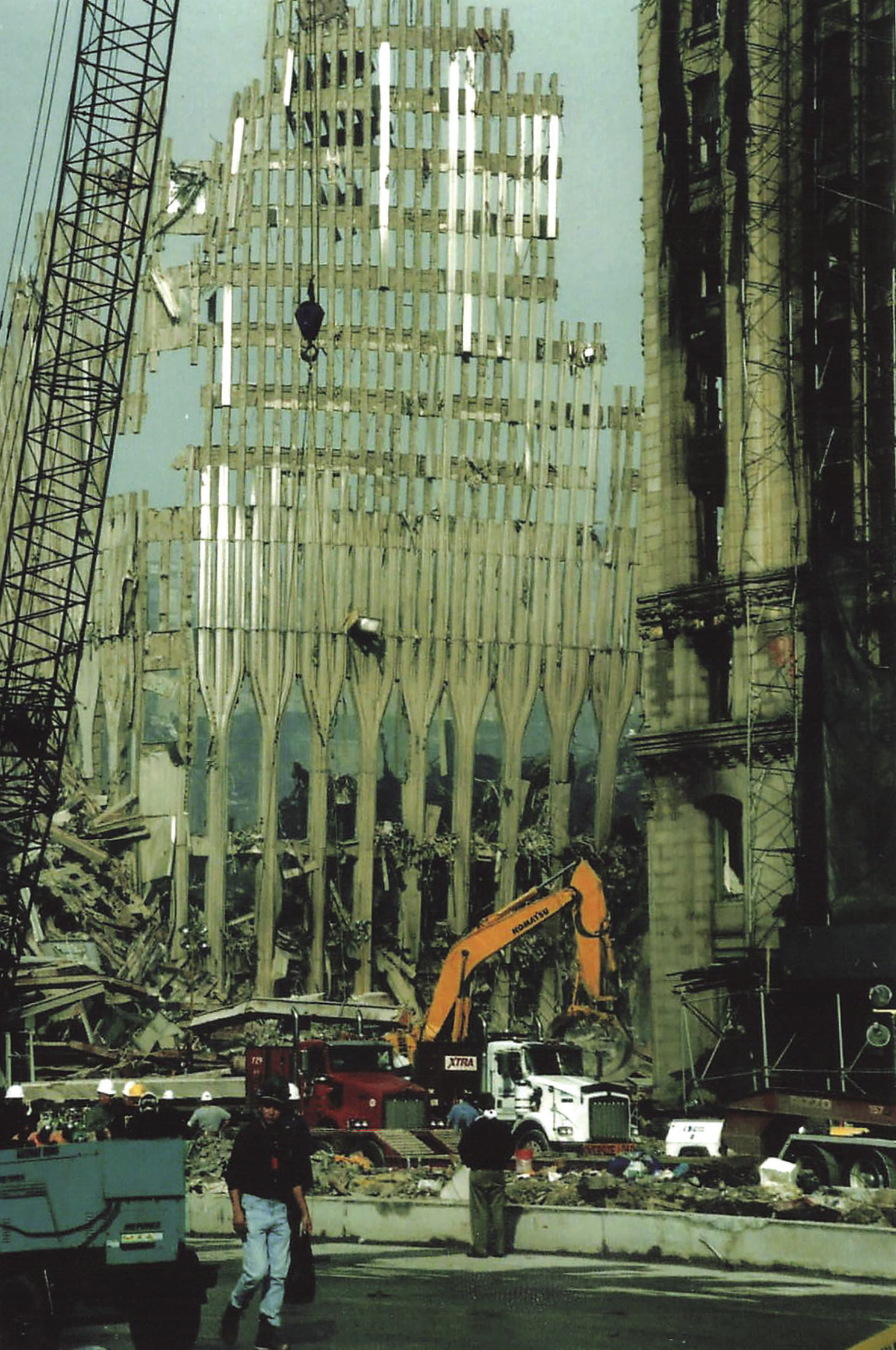
“It’s totally different than Oklahoma City, because in Oklahoma City, you could have the bucket brigade of the fire departments and everything,” he said. “And they were trying to do some of that, but there was just so much debris that you had to use heavy equipment.”
Another added challenge was that there were human remains in the debris. Ashwood said while they didn’t want to be insensitive to the families, they couldn’t leave it where it was. He detailed how they managed to get the debris out to a nearby dump on Staten Island and the hordes of white-suited FBI agents pouring through each large pile for evidence and remains.
For two weeks, Ashwood worked 12-hour shifts. He had full clearance to every part of the area. But the thing that he said stuck out to him the most were the families. In OKC, they had the Family Assistance Center set up to help keep families informed and locate their loved ones with the National Funeral Directors Association and Red Cross.
In NYC, they tried to do that to the best of their ability, but there were just so many people.
“Every time you left Ground Zero, there were just people at the fence with pictures of their loved one, 8x10s, holding up, ‘Has anybody seen this person?’And it was just it was so sad, so tragic,” he said.
Ashwood said he was honored to go help, and it’s something he will remember for the rest of his life. There is something about disasters of this magnitude that brings humanity together.
“There’s a greater good in all of us. We can argue politics, and we can have our opinions, and we can be totally different in the way we think about things, but you know what?... In disasters, there’s that period where people call you up and say, ‘What can I do to help you?’ Instead of saying what you need to do,” he said.
To the right is a photo taken by Albert Ashwood while he helped clean up Ground Zero after the Sept. 11 attacks in 2001.